KARACHI: SBP OMO Rs13.76 trillion November 2026 is the size of the liquidity the State Bank of Pakistan pumped into the banking system on November 6, 2026, through open market operations. The central bank injected the money through conventional and Shariah compliant operations, according to the results it released. The move gives banks cash for a short period, and it shows how the central bank manages the flow of money in the system. For ordinary readers, the figure is huge, but the idea is simple: the State Bank lends money to banks so that they can keep lending to people and businesses.
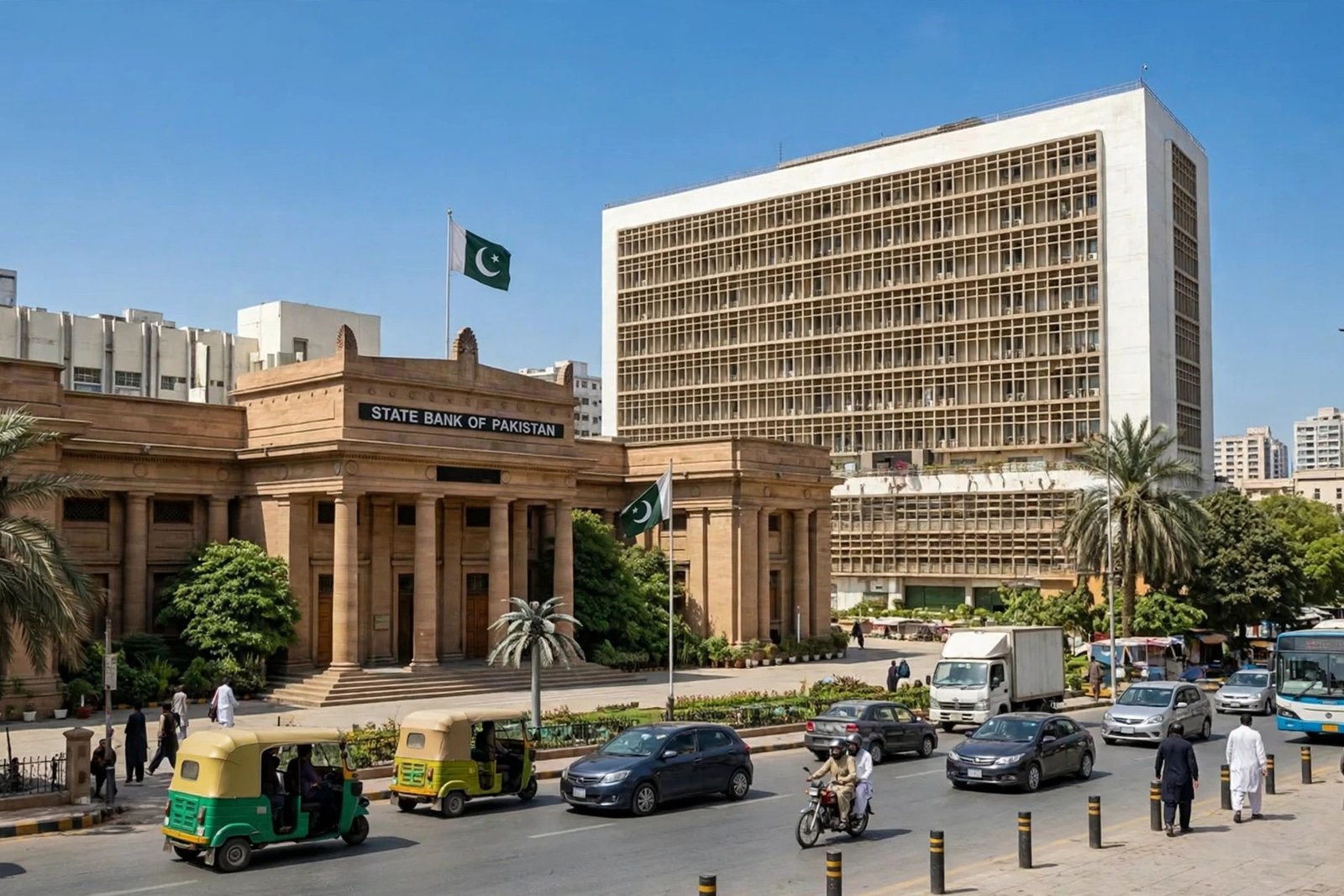
The SBP open market operations November 6 2026 were held as reverse repo operations, which means the central bank gave cash to banks against securities. The combined injection was made up of Rs13.36 trillion through conventional reverse repo operations and Rs402.50 billion through Shariah compliant operations, based on the accepted face values reported by the central bank. The two operations were held on the same day, and both were liquidity injections, which means the money goes into the banking system for a set period and then comes back.
The conventional OMO Rs13.36 trillion 12.01 percent operation was the larger of the two. Of the accepted amount, Rs13.05 trillion was provided for 14 days at an annualised rate of return of 12.01 percent, while Rs307.90 billion was accepted for seven days at the same rate. The central bank received 43 bids in the conventional operation, including 37 for the 14 day tenor and six for the seven day tenor. In the 14 day operation, the bank accepted Rs6.24 trillion on a pro rata basis from Rs6.56 trillion offered at the 12.01 percent rate, which shows that demand for cash was strong.
The Shariah compliant OMO Rs402.50 billion 12.04 percent operation ran alongside the conventional one. The central bank accepted Rs402.50 billion in the Shariah compliant operation against offers totalling Rs611 billion. The entire accepted amount was for the 14 day tenor at an annualised rate of return of 12.04 percent. The bank rejected the single seven day bid of Rs150 billion, while accepting eight of the nine quotes submitted for the 14 day tenor. The operation attracted 10 quotes in total, and Rs31.50 billion was accepted on a pro rata basis from Rs70 billion offered at the 12.04 percent rate.
The SBP realised value Rs13.43 trillion is the figure that shows what the banks actually received. The accepted realised value of the two operations totalled Rs13.43 trillion. The realised value of the conventional injection stood at Rs13.03 trillion, made up of Rs12.73 trillion for the 14 day tenor and Rs304.70 billion for the seven day tenor. The realised value of the Shariah compliant operation was Rs400.20 billion. The difference between the face value and the realised value comes from the way the bids are priced, and it is a normal part of these operations.
The 14 day tenor OMO SBP November 2026 was the main part of the exercise, and it tells us something about the banks’ needs. Most of the money was taken for 14 days, which suggests that banks wanted cash to cover a fortnight rather than a week. The seven day bids were much smaller, and in the Shariah compliant operation the single seven day bid was rejected outright. The central bank sets the rate and the tenor, and the banks bid for what they need. When the bids exceed what the bank wants to give, it accepts them on a pro rata basis, which means each bidder gets a share.
Open market operations are a routine tool, but the size of this one stands out. A sum of Rs13.76 trillion is far larger than the daily needs of most banks, and it reflects the scale of the banking system and the amount of cash that moves through it. The State Bank uses these operations to keep the money market steady, so that banks have enough cash to meet their daily needs without the cost of borrowing jumping around. The rate of about 12 percent is close to the policy rate of 12 percent set by the central bank in October, and that is no coincidence.
The operation also shows the two tracks of the banking system working side by side. The conventional operation follows the usual interest based model, while the Shariah compliant operation follows Islamic principles and avoids interest. Both were held on the same day, at nearly the same rate, and both were heavily oversubscribed. The Shariah compliant bids of Rs611 billion against an acceptance of Rs402.50 billion show that Islamic banks also needed cash, and the central bank met a large part of that demand.
Readers should note that an open market operation is not a gift or a bailout. The money is lent for 7 or 14 days, and the banks must return it with the agreed return. The injection eases liquidity for a short period, and the central bank will hold similar operations again as the need arises. The next figures to watch are the bids in the coming operations, because they will show whether banks still need this much cash. For now, the November 6 operation shows a banking system that is active, liquid and willing to pay about 12 percent for short term funds.
Also Read: PSX Falls 1493 Points as Profit Taking Halts Market Rally
Previous: Karachi Lahore Airports to Expand Under Master Plans
Next: Pakistan First Astronaut to Fly to Space Station on Nov 25