ISLAMABAD: Pakistan first astronaut mission November 25 2026 is the date announced by the government for the country’s first journey into space, when a Pakistani astronaut is set to fly to the Chinese Tiangong space station. Federal Minister for Planning Ahsan Iqbal announced the date at the closing ceremony of World Space Week in Narowal, and he said the astronaut would depart from a Chinese space centre on November 25. If the flight goes ahead as planned, it will be the first time a Pakistani travels to a space station, and it will mark a new chapter for the country’s space programme.
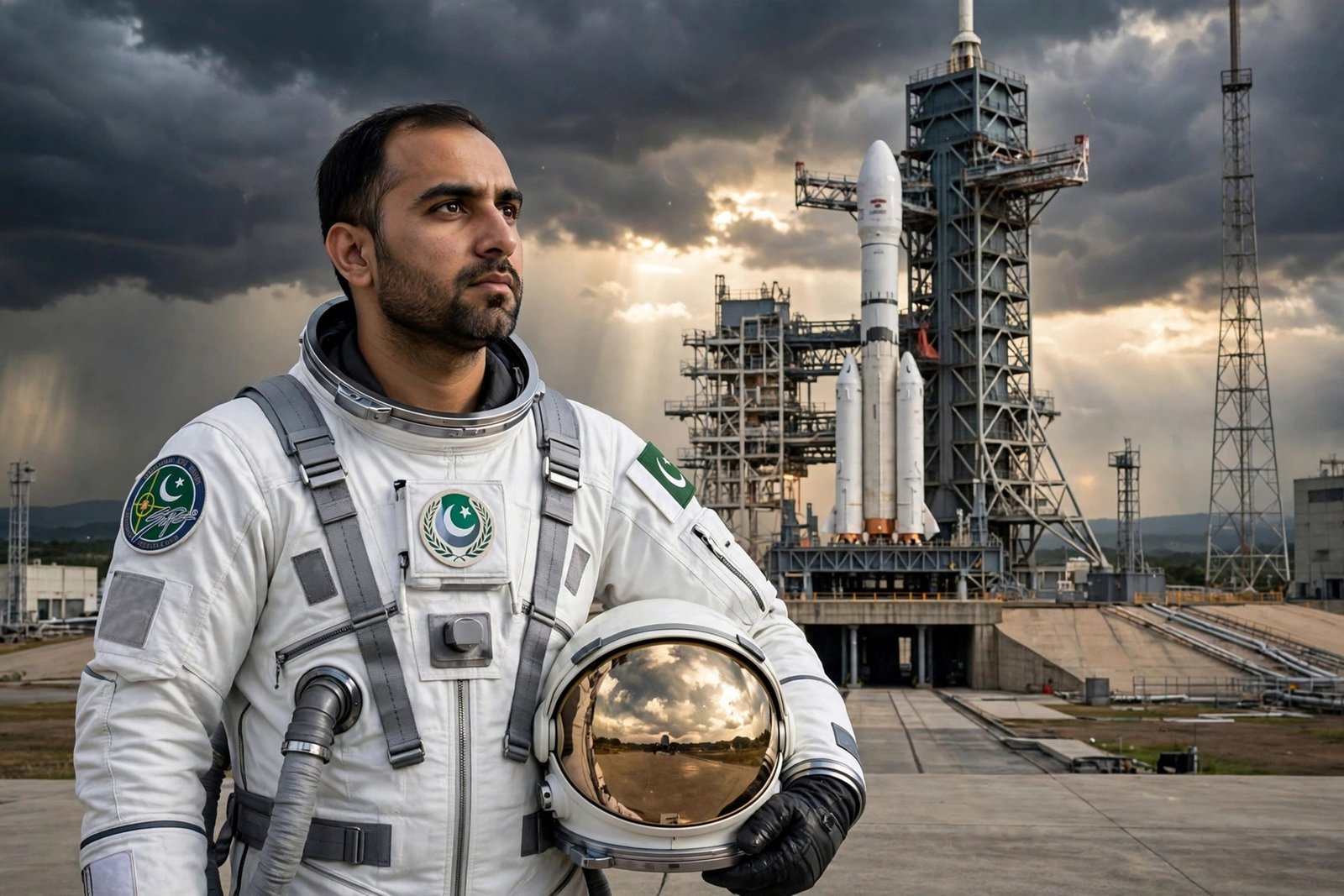
The Muhammad Zeeshan Ali Khurram Daud astronaut candidates are the two names at the centre of the mission. The two men were selected from about 20 finalists as the first foreign astronaut candidates in the Chinese space programme. One of them is planned to fly on Shenzhou 24 from the Jiuquan launch centre on a Long March rocket, and to spend about a week on Tiangong as a payload specialist. The astronaut will run experiments built in Pakistan, which means the mission is not just a ride but a chance to do real science in orbit.
The Shenzhou 24 Tiangong space station Pakistan mission is the result of years of cooperation between Pakistan and China in space. The Shenzhou spacecraft will carry the astronaut to the Tiangong station, where the crew lives and works in orbit. As a payload specialist, the Pakistani astronaut will work on experiments that were designed and built at home, and the results will be brought back to Earth for study. The mission is planned to last about a week, which is short by space standards but long enough to run the planned tests.
The SUPARCO World Space Week Narowal event was where the announcement was made, and it was a fitting place for it. World Space Week 2026 was celebrated for the first time in Narowal, with the support of the Space and Upper Atmosphere Research Commission, known as SUPARCO. The minister said the week was held to promote awareness of space science, scientific research and modern technology among young people. The closing ceremony drew students and teachers, and the announcement gave them a date to look forward to.
The Pakistan Moon landing target 2035 is the longer goal that the minister set out in the same speech. He said Pakistan had set a target of landing on the Moon by 2035, and that cooperation with China would help the country reach new heights in space exploration. The minister also spoke about the growing role of space technology in agriculture, communications, climate change monitoring, education and national security. He said space research was essential for future development, scientific discoveries and the advancement of human knowledge.
The first space museum University of Narowal is another part of the plan to get young people interested in space. The minister announced plans to establish Pakistan’s first space museum at the University of Narowal, to promote scientific awareness and inspire young people to explore emerging fields of technology. The university has already shown what its students can do, with a first place finish at the Islamabad Science Festival. The minister said young Pakistanis were achieving distinction through education and research, including students who had faced financial barriers to higher education.
The road to this mission has been long. SUPARCO was set up in 1961, and Pakistan launched its first rocket, Rehbar-1, in 1962, becoming the tenth country to launch a rocket into space. The first satellite, Badr-1, followed in 1990. In recent years, the programme has picked up speed, with the ICUBE-Q satellite flying to the Moon with China’s Chang’e-6 mission in 2024, and a series of earth observation satellites launched since 2025. The country now has 13 satellites in orbit, and the plan also includes a rover mission in 2028 and a launcher of its own by 2040.
The minister also spoke about the place of science in faith and history. Referring to the teachings of the Holy Quran, he said Islam encourages people to reflect on the creation of the universe, and he stressed the need to foster scientific curiosity, research and a passion for knowledge among young people. He noted that Muslim scientists had made great contributions to astronomy and scientific research in the past, and he said Pakistan needed to regain a leading position in knowledge and research. The message was aimed at the students in the hall, and at the country’s wider effort to build a scientific culture.
Readers should note one important point of care. The November 25 date was given by the planning minister, but the Chinese space agency has not yet officially confirmed the launch date or the crew, and China normally announces the crew only a day before launch. That means the date could still change, and the name of the astronaut who will actually fly has not been confirmed by Beijing. The mission is real and the preparations are under way, but the final word will come from China. The next news to watch is the official Chinese announcement, which should come in the days before the flight.
Also Read: Climate Disasters and Tech Disruption Fuel Pakistan Woes
Previous: SBP Injects Rs13.76 Trillion to Ease Bank Liquidity
Next: Pakistan Islamic Finance Grows as Savings Mobilise Rs40bn