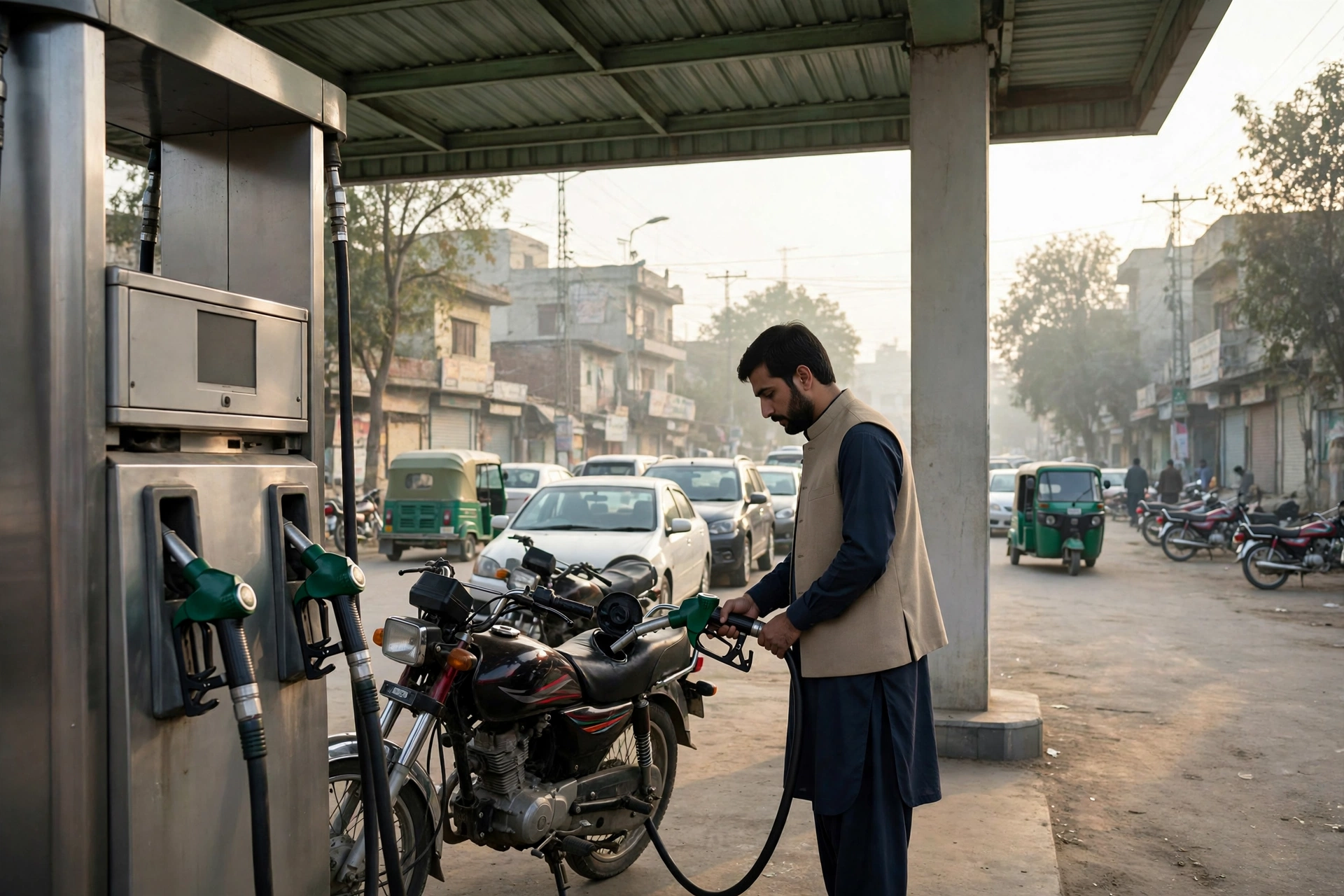
Motorists across Pakistan woke up to lower fuel prices on Wednesday, 4 November, after the federal government announced a fresh cut in petrol and diesel rates. The change came through a notification from the Oil and Gas Regulatory Authority, known as OGRA, and it took effect from the start of the day. For many households, the news brought a small but welcome break at a time when travel, transport and daily shopping all depend heavily on fuel costs.
Under the revised rates, petrol now costs Rs369.06 per litre, down by Rs5.45 from the previous rate of Rs374.51. High-speed diesel, which powers trucks, buses, tractors and much of the goods transport system, now costs Rs391.52 per litre, down by Rs3.68 from Rs395.20. The cut may look modest on paper, but for a family that fills a car tank or a driver who covers long routes every day, even a few rupees per litre add up quickly over a week or a month.
The government linked the revision to changes in the international oil market. Global crude prices had eased, and that movement gave room for a downward adjustment at home. Officials also pointed to the daily price review system now in use, which is meant to pass changes in world prices to local consumers more quickly than the older fortnightly system did. Under this system, OGRA publishes updated prices and the new rates apply for the day, which means drivers can see the change without waiting for a longer pricing cycle to finish.
Petroleum Minister Ali Pervaiz Malik spoke about the decision alongside Information Minister Attaullah Tarar. The ministers said the government wanted relief to reach ordinary people as soon as global prices allowed it. They also spoke about work under way on a similar pricing approach for liquefied petroleum gas, which many homes use for cooking and heating. That part of the plan is still being worked out, and no new gas price was announced with this fuel revision.
The cut matters most for people who travel for work. A school van driver, a delivery rider, a taxi driver and a small shopkeeper who brings stock from a wholesale market all feel fuel prices in their daily earnings. When diesel falls, the cost of moving goods can ease too, and that can help keep the prices of vegetables, flour and other everyday items steadier. Transporters have often said that a rise in diesel quickly pushes up freight charges, so a fall, even a small one, is watched closely by traders and consumers alike.
Farmers also keep a close eye on diesel rates. Tractors, tube wells run on diesel in some areas, and trucks that carry crops to mandis all use the fuel. A lower diesel price does not solve every problem a farmer faces, but it does reduce one of the costs that sit behind every bag of wheat, every crate of vegetables and every load sent to a city market. In villages, where incomes are tight and margins are thin, that difference is real.
At the same time, readers should keep the size of the change in view. Taxes and duties still make up a large part of what a consumer pays at the pump. Reports on the revision noted that the government continues to collect a heavy petroleum levy and other charges on each litre. That is why a fall in world oil prices does not always translate into an equally large fall at the filling station. The levy stays in place, and the retail price reflects both the world price and the tax structure set by the government.
There is also a wider question that drivers ask every time prices change. Will the lower rate last, or will the next daily revision push it back up? The daily system means prices can move in either direction, depending on world markets, exchange rates and import costs. A cut today is good news for today, but it is not a promise about tomorrow. Smart drivers still plan their fuel use, keep their vehicles tuned, and avoid wasteful trips where they can.
For now, the practical advice is simple. Check the rate at your local filling station before you fill up, keep your receipt, and note the date, because daily prices can differ from what you paid last week. If you run a small business that depends on transport, this is a good moment to review your delivery costs and see whether the saving can be passed on to customers, even in a small way. A little relief shared fairly goes a long way in building trust with regular buyers.
The government has said more good news on fuel prices could follow if world prices stay soft. Whether that happens will depend on factors outside Pakistan, including global supply, demand and shipping costs. For today, though, the message for motorists is clear. Petrol is cheaper by Rs5.45 a litre, diesel is cheaper by Rs3.68 a litre, and the new rates apply from 4 November. That is a small step, but for millions of people who travel every day, it is a step in the right direction.
Also Read: PSX KSE-100 recovers 155 points in volatile session
Also Read: Fauji Foundation Buys 19.7% Stake In Pearl Continental
In another finance-related development for Pakistan, SCO Interbank Consortium Chair Goes To Pakistan For 2027 shows how Pakistani banks are taking a leading regional role.