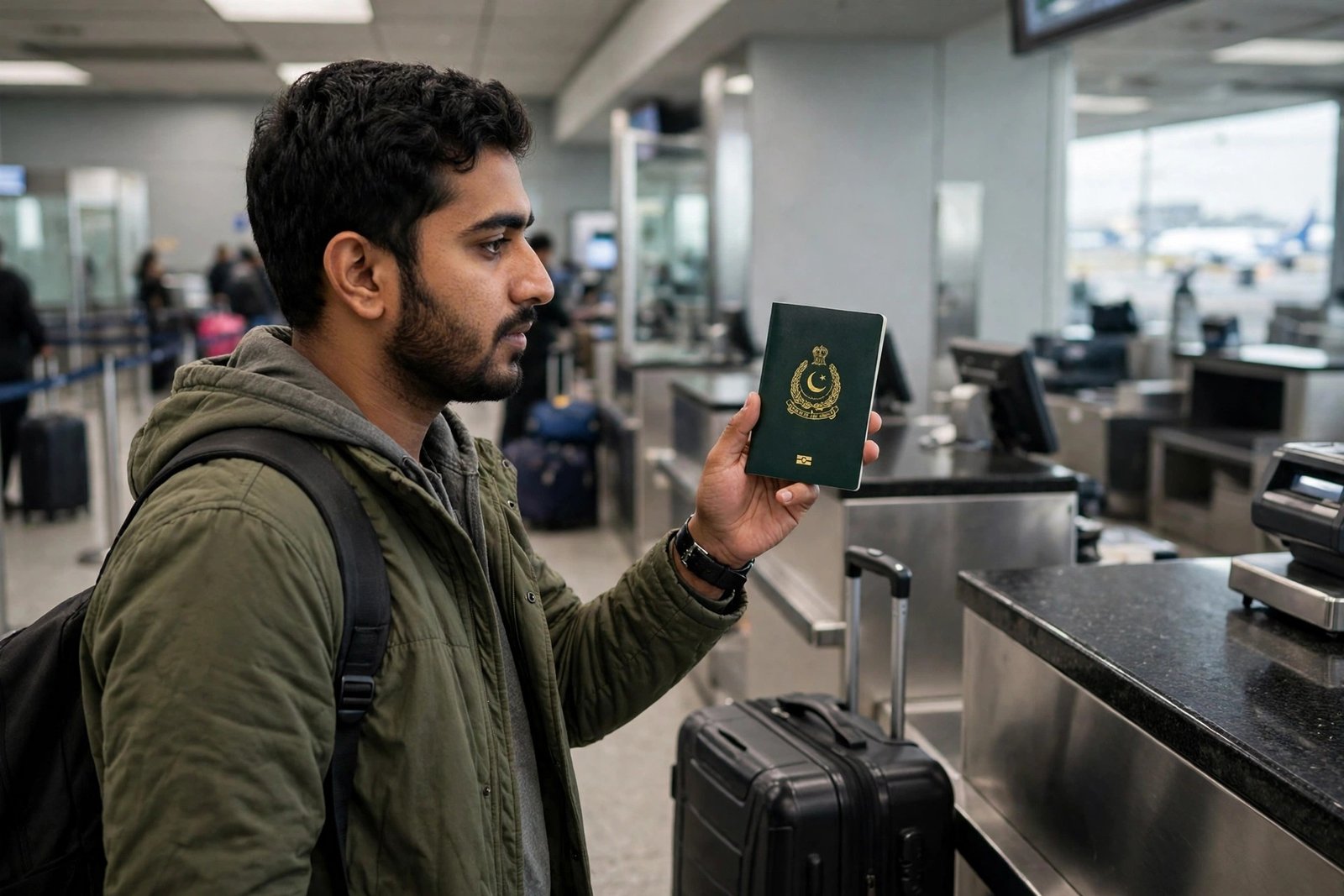
Pakistan e-passport rollout October 2026 has moved new passport applications to chip based e-passports, replacing the old machine readable passport, known as the MRP. The Directorate General of Immigration and Passports, known as DGIP, has expanded the e-passport system across passport offices in Pakistan and at missions abroad. New applications at participating locations are now issued as e-passports, and the old MRP is being phased out for new issues.
The Pakistan e-passport chip biometric security is what makes the new document different. The e-passport has an embedded electronic chip that holds encrypted biometric data, and it uses laser engraving and automated identity checks. The chip also supports NFC technology, which lets border systems read the passport quickly and safely. These features make the passport harder to forge, and they speed up the checks at airports, because the machine can verify the holder in seconds.
The DGIP e-passport New York October 23 is one example of the rollout abroad. The Consulate General of Pakistan in New York announced that it would issue e-passports from 23 October 2026, and other Pakistani missions have also published notices about stopping new MRP issuance. The rollout date was first set for 15 October, but it was later moved to 23 October, according to reports. The change means that Pakistanis abroad who apply for a new passport will now get an e-passport instead of the old MRP.
The e-passport is not new in itself. DGIP first introduced the electronic passport in 2022, at first for diplomatic and official categories, and then expanded it to all field offices in Pakistan from 16 August 2023. The 2026 change is different, because it is a much wider move towards e-passports as the standard document. Pakistan is now moving away from issuing new MRPs at a growing number of locations, and the e-passport is becoming the normal passport for new applicants.
The Pakistan e-passport fees DGIP are listed on the DGIP website, and the fees depend on the type and validity of the passport. The ordinary e-passport fees within Pakistan are set out in the DGIP schedule, and the fee is shown on the screen when a person applies. One point to note is that DGIP says the Fast Track service is not available for e-passport delivery, so applicants who are used to paying extra for fast delivery will need to plan ahead. Fees and service availability can change, so applicants should check the live information on the DGIP portal before they apply.
The NADRA PakID passport renewal online route is the other way to get a passport without visiting an office. DGIP, working with NADRA, now lets eligible citizens renew a passport through the PakID mobile app. The applicant signs in to the app, selects Pakistani Passport Services, and then taps Passport Renewal. The service is for renewal cases only, and it works when the old passport is available, the particulars match the NADRA record, and the passport is expired or has up to one year of validity left. If more than one year of validity remains, the app will not allow the renewal through this route.
The Pakistan e-passport first name last name rule is a detail that applicants need to know before they apply. DGIP says that both a first name and a last name are mandatory for an e-passport application. A person whose NADRA record has only one name may need to correct the identity record first, before an e-passport can be issued. This is because the chip and the international standard for passports need both names, and a single name record does not fit the system.
For first time applicants, the online route is not open. DGIP describes the online service for applicants inside Pakistan as renewal only, so a person applying for a passport for the first time, or a person who needs a change that the app does not support, must visit a passport office or a mission. The same applies to some other categories that the app does not cover. Applicants should check the DGIP portal for the categories that are available online, and they should not assume that every case can be done from home.
The move to e-passports fits with the wider digitisation of government services in Pakistan. The Jeddah consulate has already moved NADRA and passport visits to an online appointment system, and the PakID app is being used for more services each year. For travellers, the e-passport should mean faster checks at airports, because the chip can be read by machines in many countries. For the government, it should mean fewer fake passports and a better record of who holds a valid travel document.
Also Read: Karakoram Express Returns With 20 Coaches And AC Sleeper
Next: Railways Runs Special Trains for Sikh Pilgrims to Nankana