
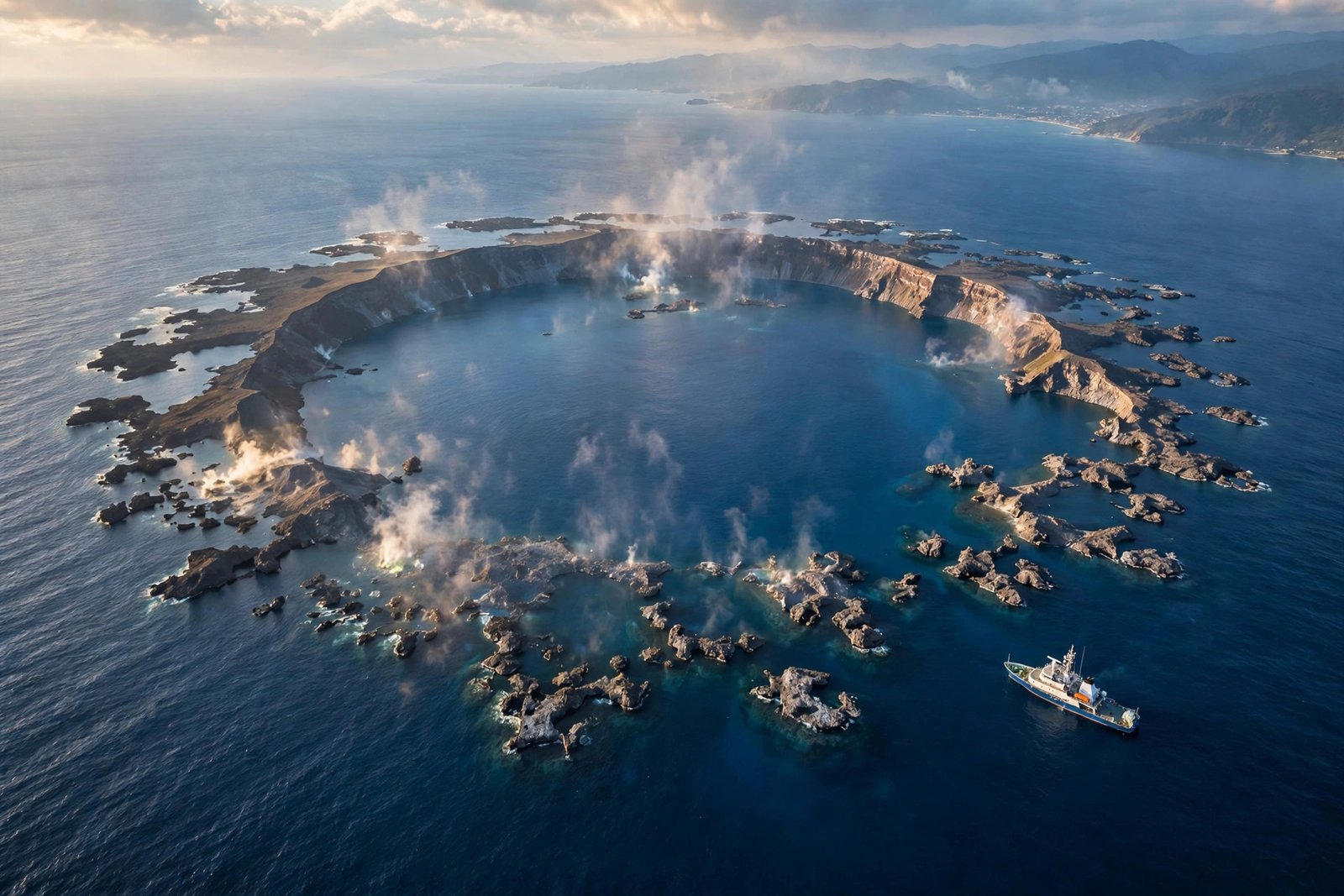
Scientists have found that the vast magma reservoir beneath Japan’s Kikai supervolcano is filling up again with fresh magma. The discovery could improve how the world watches giant volcanoes such as Yellowstone and Toba.
The Kikai caldera sits mostly under the sea, south of Japan’s Kyushu island. About 7,300 years ago it produced a colossal eruption, the most powerful of the Holocene, the current geological epoch that covers roughly the last 11,700 years.
When a volcano erupts on that scale, the ground above its emptied magma chamber can collapse. That leaves a wide, shallow crater known as a caldera.
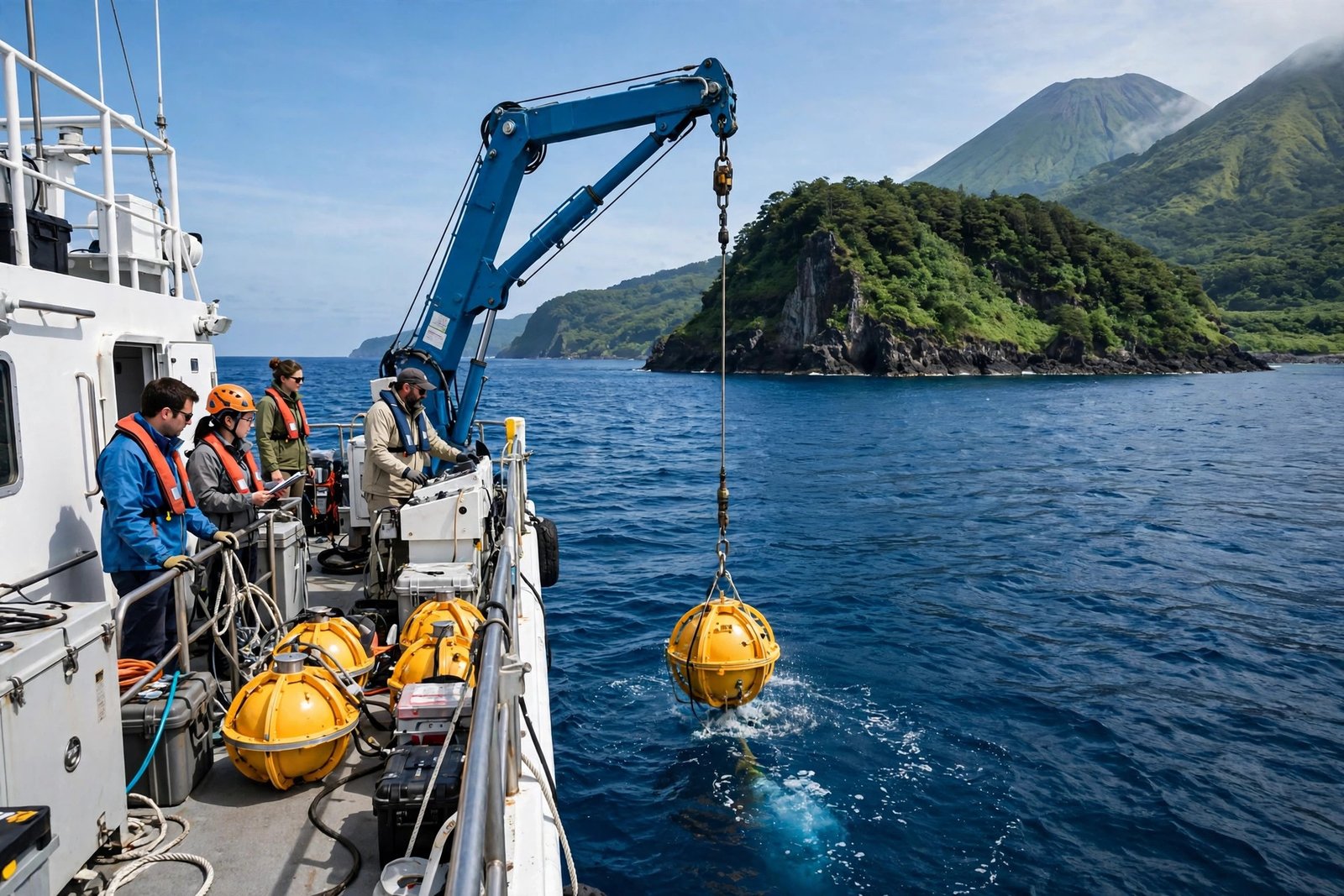
A team led by Kobe University, working with the Japan Agency for Marine Earth Science and Technology (JAMSTEC), set out to look beneath that crater. Because the caldera lies underwater, the researchers could carry out large-scale seismic surveys.
They used arrays of air guns to send pulses of sound into the crust below the seafloor. Ocean-bottom seismometers recorded how those waves travelled through the rock, and from those readings the team built a picture of what lies below.
Same reservoir, new magma
The survey revealed a large body rich in magma sitting directly beneath the caldera. Its position and scale match the reservoir that fed the giant eruption 7,300 years ago, which means the volcano has not simply gone cold.
Several clues point to fresh magma rather than leftovers. A new lava dome has been growing near the centre of the caldera for about 3,900 years, and its chemistry differs from the material thrown out in the ancient eruption.
The same is true of other volcanic products formed since. That difference suggests the magma arrived from deeper layers of the Earth, instead of sitting unchanged in the chamber since the catastrophe.
The results were published in the journal Communications Earth and Environment.
No eruption warning
The researchers are careful about what their finding does not say. A refilling reservoir does not mean Kikai is about to erupt, and the team stresses the discovery should not be read as an alarm.
Giant calderas rebuild slowly over thousands of years. The value of the study lies in understanding that long process, not in predicting any near-term event.
Still, the work matters for safety. Japan lives with constant volcanic and earthquake risk, and knowing that a giant system is active again helps scientists decide where to place monitoring instruments and what changes to watch for in the years ahead.
Lessons for Yellowstone
Kikai is not the only giant caldera on the planet. Yellowstone in the United States and Toba in Indonesia are famous examples, and scientists have long wondered how such systems recover after a huge eruption empties them.
The Kikai findings support a simple picture: new magma rises from below and gradually re-injects into the shallow reservoir, slowly rebuilding what the eruption removed. If that pattern is general, it gives researchers a clearer model for reading the warning signs at other giant calderas around the world.
Supervolcano eruptions are among the most destructive events on Earth, able to affect climate and harvests far beyond their own region. They are also so rare that science has never witnessed one directly.
Every clear look inside a system like Kikai therefore counts. By showing how fresh magma re-enters a chamber after a giant eruption, this study gives monitoring teams a better map of the road from quiet to dangerous and, in theory, more time to notice if a sleeping giant ever starts to stir.
Read: Two killed in attack on Saudi Arabia’s King Fahd airport as drone strikes spread