
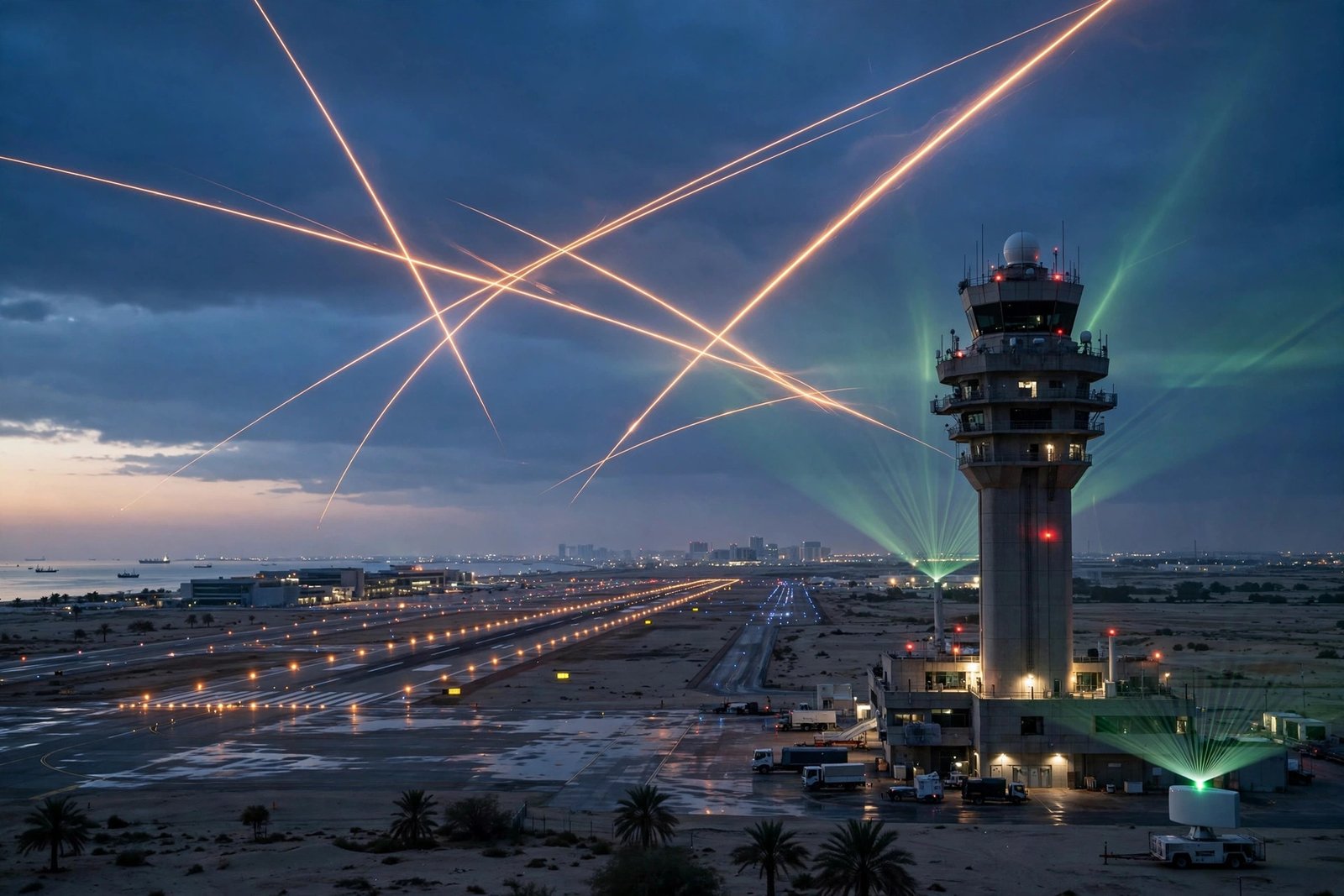
The Saudi Arabia airport attack killed two people and injured eight at King Fahd International Airport in Dammam, while Saudi air defences destroyed drones over the Eastern Province in the latest wave of Houthi strikes on the kingdom.
Attack on Dammam airport
Saudi Arabia’s General Authority of Civil Aviation said the death toll from Wednesday evening’s attack on King Fahd International Airport in Dammam had risen to two: a Saudi national and an Indian resident. Eight other people were wounded, with injuries ranging from minor to critical, and the airport suffered material damage that officials were still assessing.
Flights were diverted away from the airport overnight, according to flight tracking service Flightradar24. By Thursday, the aviation authority said operations had resumed and air traffic had returned to normal.
The Houthi movement in Yemen said it targeted the airport, the Saudi defence ministry and a facility of state oil giant Aramco. Saudi authorities did not name a culprit in their first statements. Coalition spokesman Major General Turki Al-Maliki announced that coalition forces had intercepted and destroyed four drones over the Eastern Province, and the coalition reported destroying seven more drones in separate incidents the same day.
Oil field workers also killed
The airport was not the only target. Earlier on Wednesday, debris from an intercepted drone fell at a facility of Aramco’s Shaybah oil field in the country’s southeast. Saudi Arabia’s Ministry of Energy said two workers, a Nepali national and a Filipino national, were killed, and two others, a Pakistani and an Indian national, were injured. The falling debris also set a contractor’s vehicle on fire.
The attacks are part of a growing campaign. The Houthis, who control Yemen’s capital Sanaa and much of the country’s north, have stepped up missile and drone strikes on Saudi airports, oil facilities and shipping in recent weeks. Saudi Arabia leads a military coalition that has backed Yemen’s internationally recognised government against the group since 2015.
The United States reacted late on Wednesday by ordering some of its diplomats and the family members of government employees to leave Saudi Arabia. The US Embassy in Riyadh also issued a security alert warning of possible further attacks.
Not the first attack of its kind
Saudi Arabia’s energy sites have been targeted before. In September 2019, drone and missile strikes on Aramco’s Abqaiq and Khurais plants briefly knocked out more than half of the kingdom’s oil output and shook world markets. That attack was also claimed by the Houthis.
Since then, the kingdom has spent heavily on air defences, and most incoming drones and missiles are now destroyed in the air. Wednesday’s deaths show that even a mostly successful defence cannot stop every piece of falling debris.
What remains unclear
Several questions are still open. The full extent of the damage at King Fahd International Airport has not been published, and officials have not said when a complete assessment will be ready. Saudi authorities also stopped short of naming who carried out the airport attack in their first statements, even as the Houthis claimed it. Travellers have been advised to check flight schedules, as diversions can return if attacks resume.
Why the Saudi Arabia airport attack matters
The Saudi Arabia airport attack shows that airports and oil fields are the two pillars of Saudi Arabia’s economy and its image as a safe place to do business. Repeated strikes that kill civilians and foreign workers test both. They also push up world oil prices, which is why markets as far away as Karachi fell this week. If the attacks continue, pressure will grow on all sides to either escalate the Yemen conflict or find a way back to talks.