

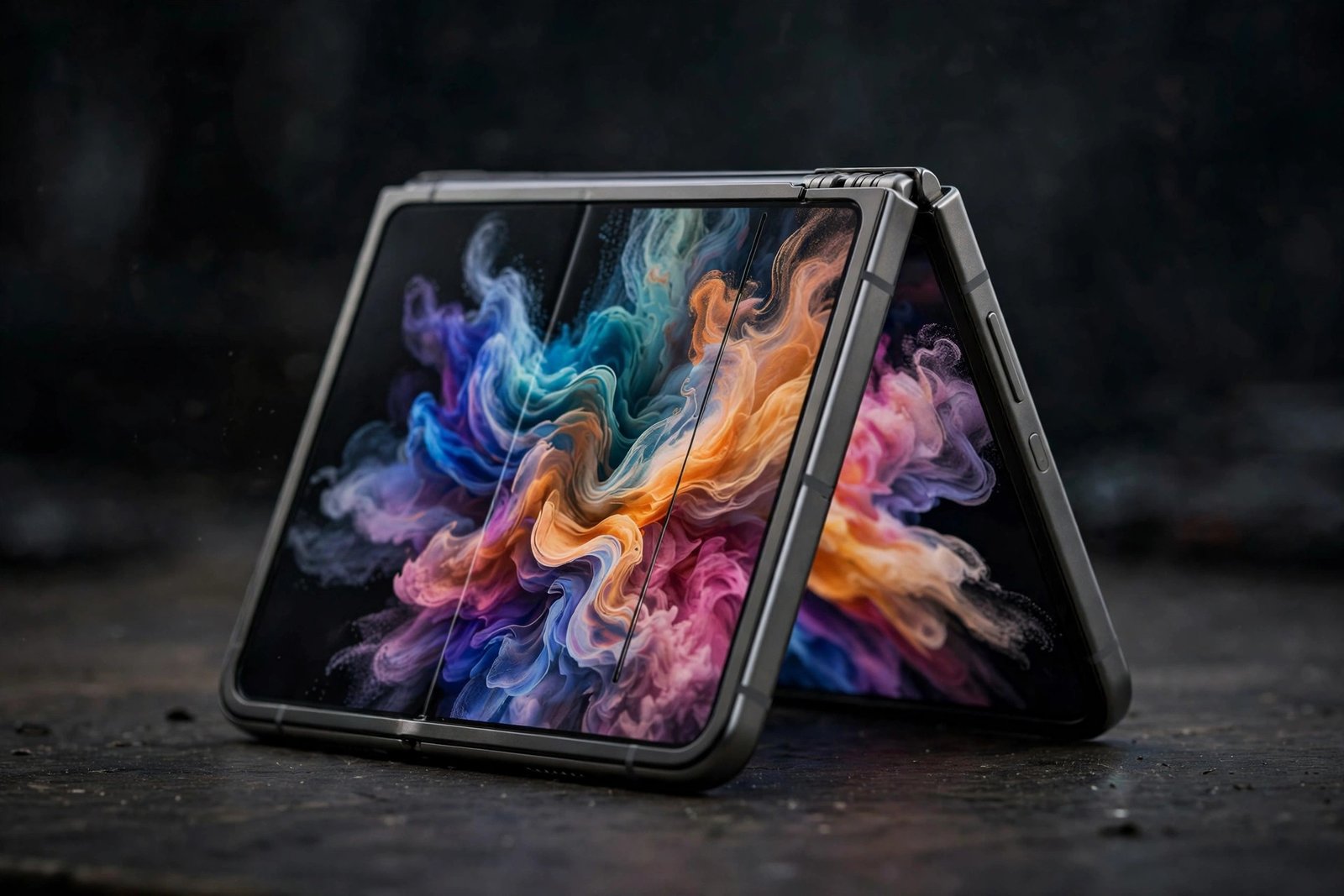
Apple’s first foldable phone went on sale in the United States and the United Kingdom on Friday, and reviewers wasted no time trying to break it. The early verdict from two tough durability tests is mixed. The hinge on the $1,999 iPhone Duo looks strong, but the crease down the middle of its folding screen grows more visible the more the phone is used.
The tests matter because Apple has not published a fold rating for the Duo, saying only that it resists wear and meets the high standards of iPhone. Samsung, by comparison, rated its Galaxy Z Fold 6 for 200,000 folds. Buyers paying a premium price are left to rely on reviewers with machines, patience and plenty of spare time.
10,000 folds, then the freezer
Chinese tech reviewer Tim Pan started with 500 folds and compared his phone against a brand new unit. Even at that early stage, the crease looked deeper, although he said it was hard to feel with a finger or to spot while the screen was in bright mode.
His team then put the phone on a folding machine for 10,000 folds at room temperature, followed by 1,000 more at minus 20 degrees Celsius. The hinge stayed smooth throughout and still helped the phone swing open, just as it did on day one. The crease, though, had become clearly more pronounced.
Pan also warned that hair or sand could work their way into the hinge at certain angles. He called that unlikely, but not impossible.
A robot named Hingey
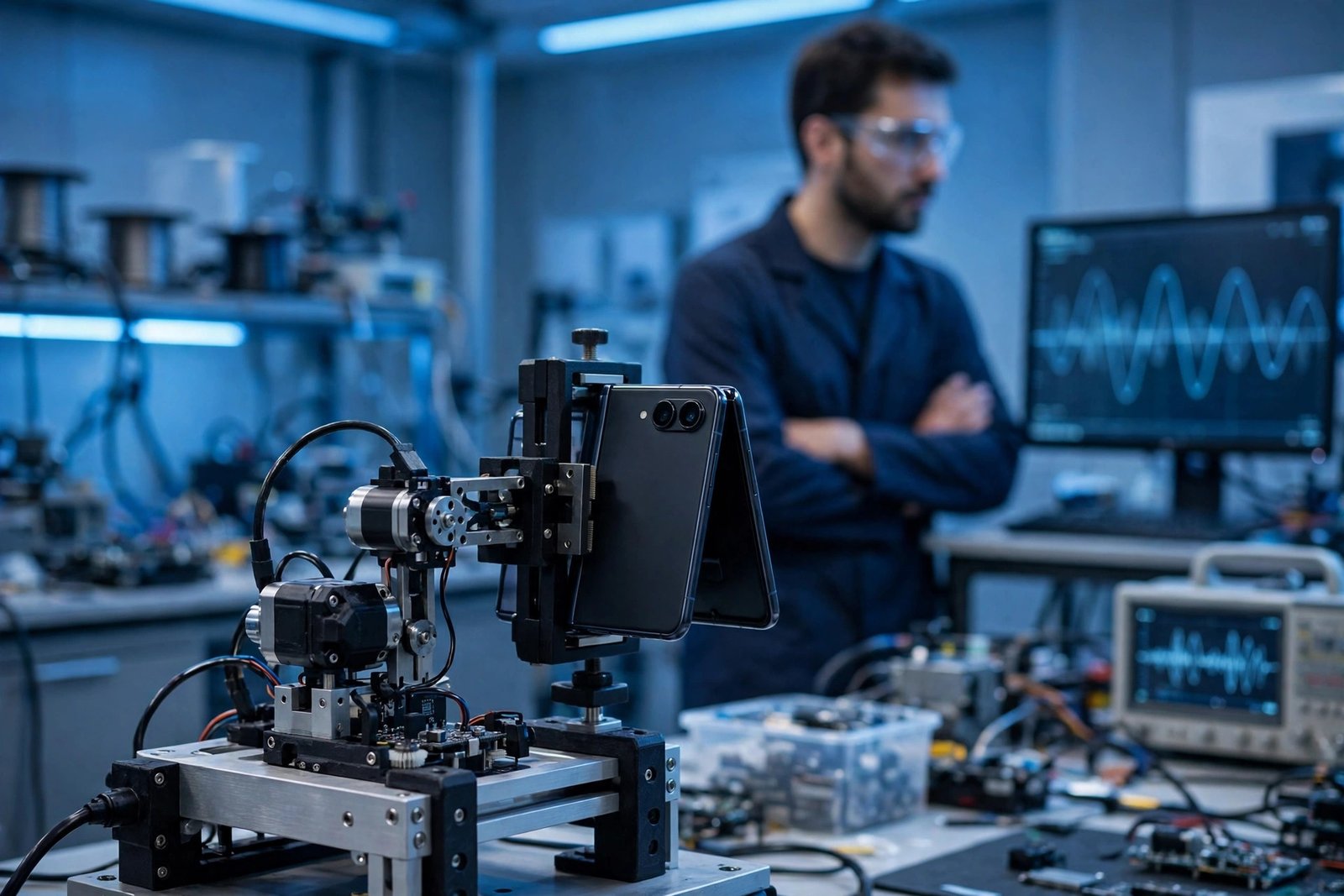
Journalist Joanna Stern took a different route. Working with hardware designer Aron Cohen, she built a small folding robot from a servo motor and 3D printed parts, and named it Hingey.
For four nights, the machine opened the Duo to about 130 degrees and closed it again, 17 times a minute, for eight hours a night. That added up to 32,640 folds, which Stern estimated is roughly a year of normal use.
Afterwards, the hinge had not loosened at all. Measured with a calibrated push-pull gauge, it came out slightly stiffer than before the test. In everyday use, Stern said, it felt pretty much the same as on the first day.
More than the hinge
The Duo handled the rest of the testing well. It carries an IP68 water resistance rating and came through half an hour under water without damage. Two accidental drops left one small scratch and no dents, and bending the phone backwards did not crack it.
There are softer spots. The part of the 7.6 inch inner display that sits directly above the hinge feels pliable, and pressing it firmly makes the protective layer flex inwards. A matte nano-texture coating helps hide the crease in most light, though it still shows under bright, direct light.
The hinge itself is a serious piece of engineering, made with titanium and built from more than 100 components. Reviewers also liked the selfie camera tucked into the corner of the inner screen, which avoids the cutout some rivals use, and the way iOS and Apple Pencil make use of the bigger display. Less welcome is the weight. At 254 grams, the Duo is noticeably heavier than a normal phone.
Stern’s overall verdict captured the mood of the first reviews. She called the Duo a beautiful and surprisingly durable piece of hardware, while also finding it buggy in places and full of first generation compromises.
Why it matters
Apple waited years to enter the foldable market, long after Samsung, Google and Motorola had launched theirs. Its argument has been that the technology needed to mature first, and these tests suggest the hardware has mostly caught up.
But foldables are judged on what happens after month six, not week one. A crease that deepens after 500 folds may bother owners long before the hinge ever wears out, and repairs on folding screens are expensive. For now, the Duo looks like a strong first attempt with a familiar weakness, and the crease remains the thing to watch.