
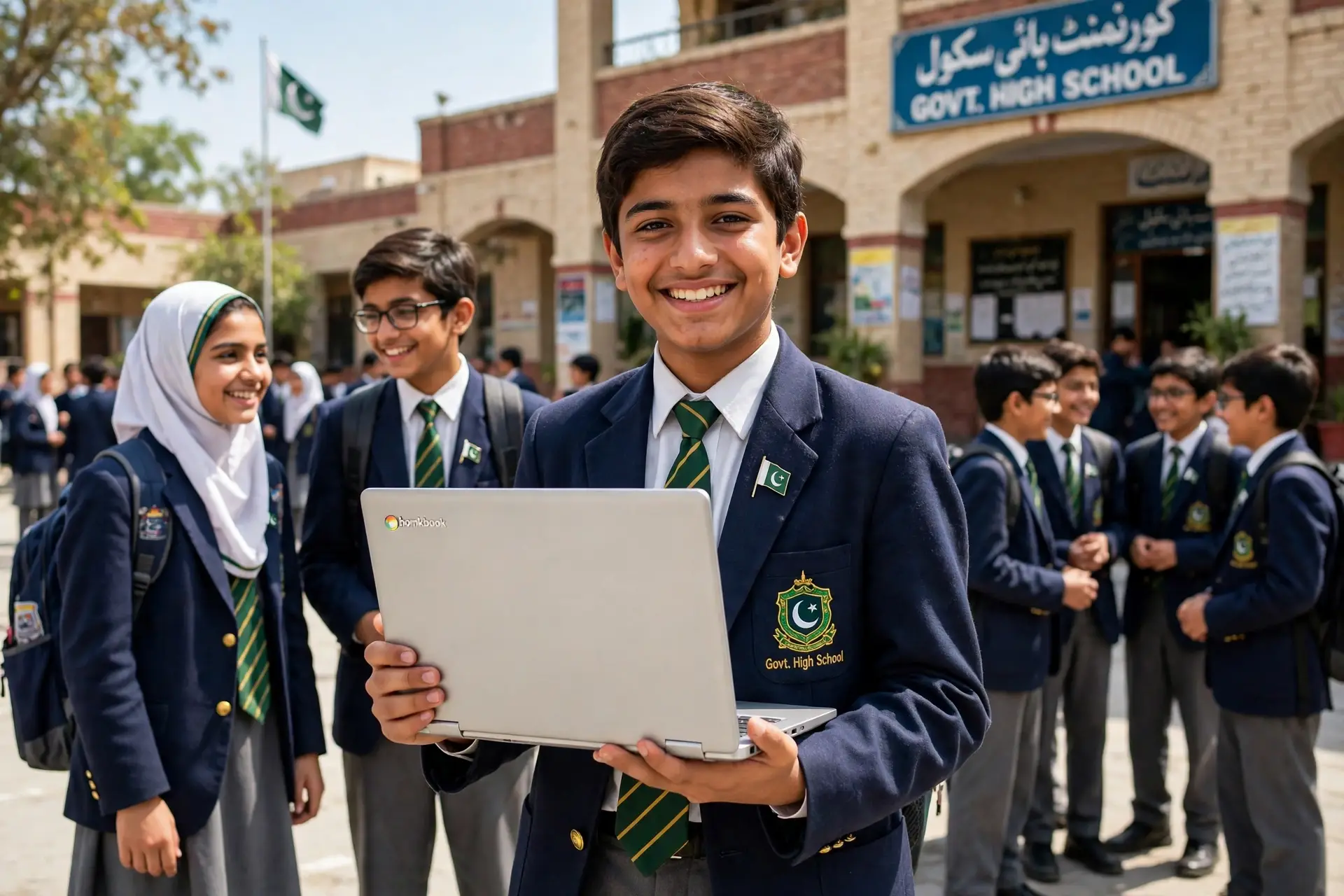
ISLAMABAD: Prime Minister Shehbaz Sharif on Sunday launched a nationwide scheme to give 500,000 Chromebook laptops and internet devices to deserving students and high achievers across Pakistan. The devices will be handed out strictly on merit, and the full allocation is to be completed within two years.
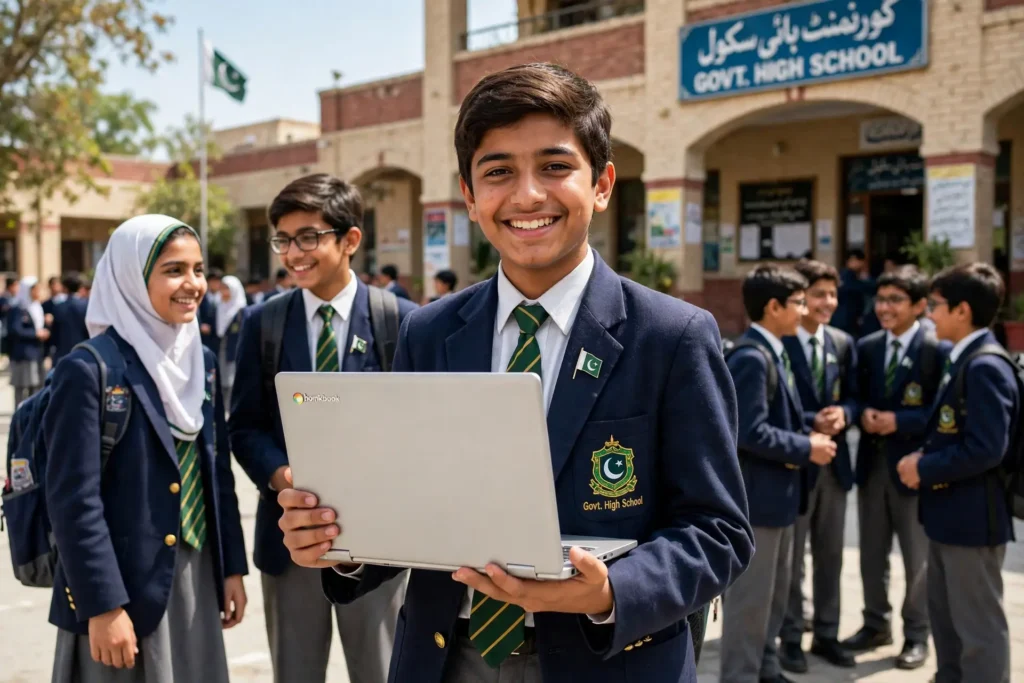
The Prime Minister’s Youth Chromebook Scheme was launched at a ceremony in Islamabad. The prime minister said equipping young people with modern technology was a fundamental duty of the government and a key step towards a prosperous, knowledge-based Pakistan.
He said poverty must not stand in the way of a student’s education. The scheme is designed to give students from different backgrounds a better chance to study, learn digital skills and compete for jobs in a world that runs on technology.
The Chromebooks come with MiFi internet devices, so students can get online even where home internet is weak. The prime minister said one connection could benefit up to five people, which would extend the benefit to about 2.5 million people across the country.
Who can apply
The scheme is for top-performing students of government and public schools. In Punjab, Sindh, Khyber Pakhtunkhwa and Balochistan, it covers students who did well in Grade 9, known as SSC-I, in the annual examinations of 2026.
In Islamabad, Azad Jammu and Kashmir and Gilgit-Baltistan, it covers top students of both Grade 9 and Grade 10. Students of registered religious seminaries are also included, and their cases are handled separately through the Directorate General of Religious Education.
Private school students are not eligible, except for private schools funded by provincial education foundations. Students are ranked on their SSC-I results, which are checked by the Inter Board Committee of Chairmen, and they need at least 50 percent marks.
Each education board has sent its own list of top performers to the commission. There is no single nationwide marks cut-off, because each board sets its own standard for who counts as a top performer.
The prime minister said the earlier laptop schemes had helped students continue their studies during the Covid-19 pandemic, when devices became essential for learning and earning. He recalled that previous PML-N governments had given out 600,000 laptops over a decade.
He said the new scheme would build on that experience by pairing the device with internet access, so students could use e-libraries and other online resources more fully.
How to apply
Students apply online only, through the official portal at pmychromebooks.ibcc.edu.pk, which is run by the Inter Board Committee of Chairmen. The portal lets a student check whether their name is on their board’s list.
The student selects their education board, then enters a CNIC or B-Form number, roll number or registration number, along with their date of birth. The portal then pulls up the student’s name, school and marks from the board’s list.
After checking the details, the student uploads the required documents. These include a recent photograph, the examination mark sheet, an attested copy of the student’s B-Form or CNIC, and an attested copy of the father’s or guardian’s CNIC.
Each student can submit only one application, and the form cannot be changed after it is sent. Students are advised to check every detail carefully before submitting, because a wrong entry can cancel the allocation.
The devices will be delivered directly to verified students by courier, and a central monitoring system will track each dispatch and delivery. Grievance committees will be set up at board and provincial level to deal with complaints about merit lists, missing records and non-delivery.
Punjab gets the most
Of the 500,000 Chromebooks, Punjab will receive 181,090, the largest share of any province. Sindh will get 85,925, Khyber Pakhtunkhwa 51,170 and Balochistan 31,815.
Islamabad has been allocated 100,000 devices, while Azad Jammu and Kashmir and Gilgit-Baltistan will get 25,000 each. The total across all provinces and regions comes to 500,000.
Within each province and region, four out of every five devices will go to school students and one to seminary students. Among the school students, 70 percent of the quota is for science students and 30 percent for arts students.
The Tokyo Technology Care Foundation has partnered with the government on the initiative, and the prime minister thanked the foundation at the launch ceremony. Pakistan set up its first Google Chromebook assembly line last year, which officials say will help local supply chains.
The scheme is the latest step in a long line of student device programmes. Its test will be whether the devices reach the students on the merit lists on time, and whether the internet devices that come with them work well enough for study in towns and villages alike.