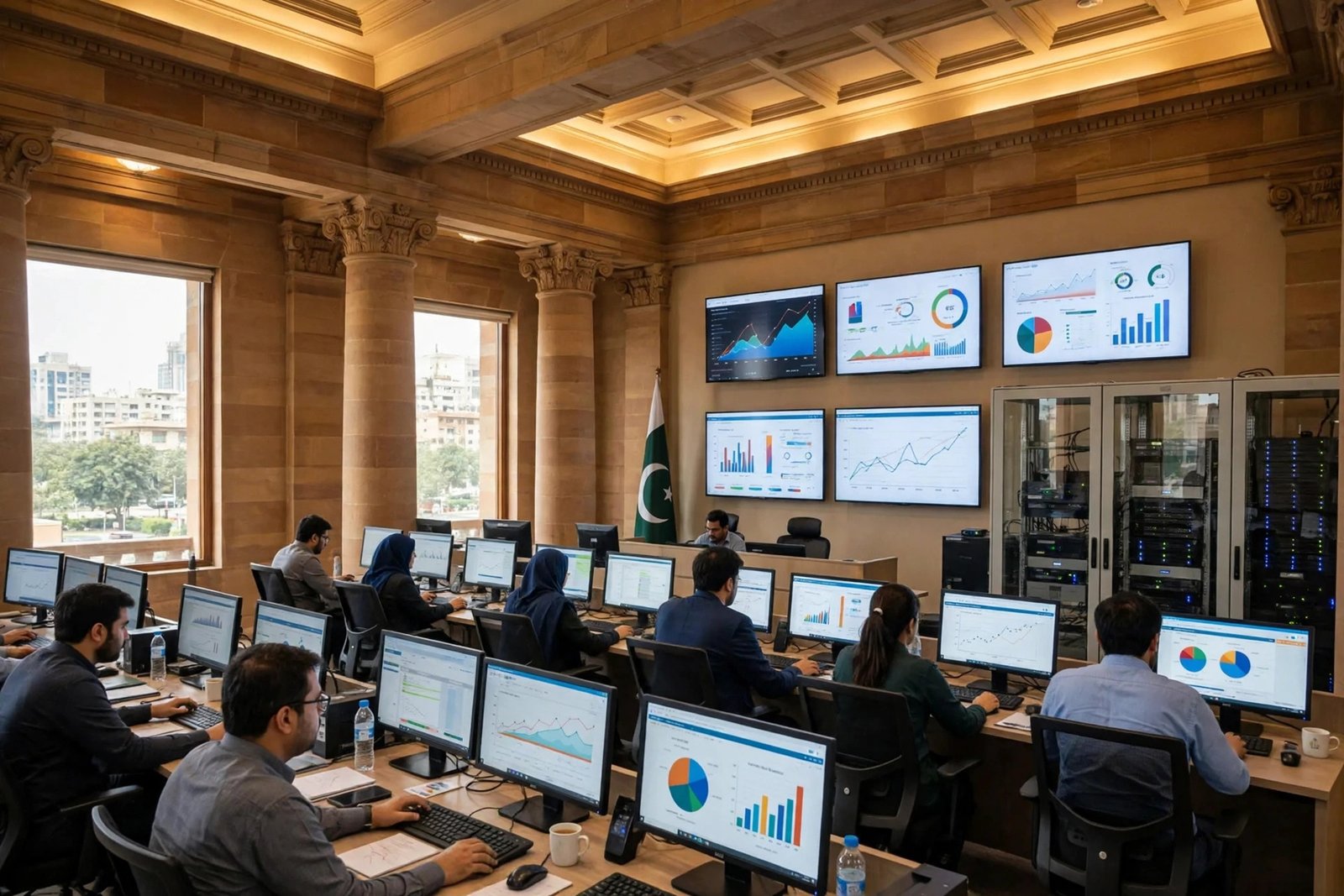
Pakistan IT exports cross 1.2 billion dollars in the first quarter of the current fiscal year, according to data released by the State Bank of Pakistan. IT exports, including computer services and related activities, exceeded 1.2 billion dollars in July to September 2026, the first quarter of fiscal year 2027. Software exports and consultancy accounted for 41 percent of the total, and together they generated a combined 521 million dollars in foreign exchange during the quarter. For a sector that was once small, the figure shows how far Pakistan’s digital economy has come.
Software exports are the largest part of the story, and they grew strongly in the quarter. According to State Bank data, software consultancy generated 364 million dollars in export receipts during July to September, while software exports contributed 157 million dollars. In the corresponding period last year, the two segments earned 293 million dollars and 143 million dollars respectively, a combined year on year increase of around 19 percent, or 85 million dollars. That growth is faster than most other export sectors, and it shows demand for Pakistani software work abroad.
IT freelancers generated 333 million dollars in export receipts in the same quarter, while call centres contributed 101 million dollars and telecommunications services earned more than 75 million dollars. Freelancers are independent workers who sell their skills online to clients abroad, and they are now a large part of the IT export total. The number of freelancers in the country has grown beyond 2.37 million, and their export earnings reached a high of 1.76 billion dollars in the last fiscal year.
Shaza Fatima Khawaja is the federal minister for IT and Telecommunication, and she has been linked to the sector’s recent growth. She received the Industry Champion of the Year 2026 honour at the Fast Mode Awards, which is the programme’s leading individual honour, with one industry leader selected worldwide each year. The 2026 competition attracted participation from more than 500 companies across over 60 countries. During her tenure, Pakistan’s IT exports rose to a record 4.6 billion dollars, while freelancer export earnings reached a high of 1.76 billion dollars.
Digital economy growth in Pakistan is now a stated goal of the government, and the finance minister has set a target for the current year. Finance Minister Muhammad Aurangzeb has said IT exports are projected to reach 5.5 billion dollars during the current fiscal year, while workers remittances are expected to rise to 44 billion dollars. He said IT services exports have increased from 1 billion dollars to 4.6 billion dollars, with freelancers contributing about 1.6 billion dollars. The growth of the digital economy offers opportunities for foreign exchange, employment and competitiveness, he said.
The State Bank of Pakistan has also helped freelancers to get paid. In April 2026, the central bank introduced a package of reforms aimed at freelancers, which abolished the Form R declaration that had to accompany each inward remittance below 25,000 dollars, and replaced it with a one time declaration. The reforms also allowed freelancers to retain up to 50 percent of their export proceeds in foreign currency, in dollars, in a special account, where they can spend internationally without asking the central bank for permission first. Those changes make it easier for freelancers to receive money from abroad.
Artificial intelligence is now changing the work itself, and industry experts say Pakistani IT firms must adapt. Software exports and consultancy earn money from coding and manual quality assurance, but AI is now doing much of that work, which puts the hourly billing model at risk. Experts say IT exporters must shift from low margin, hourly outsourcing to high value, outcome based work, where they are paid for the result, not for the hours spent. That shift is hard, because it needs new skills, but it is also an opportunity for firms that can offer AI services.
The sector also posted a historic trade surplus of 3.9 billion dollars in the last fiscal year, which means IT exports were far larger than IT imports. That surplus helps the national economy, because it brings in dollars without needing to import much in return. Pakistan also completed its largest spectrum auction in March 2026, covering 5G and Next Generation Mobile Services, and Google formally registered its operations and opened its first office in Pakistan in August 2026. Those steps show that global companies are taking the Pakistani market seriously.
For young people in Pakistan, the IT sector offers a path to work that does not depend on a factory or an office in a big city. A young developer in Multan or a designer in Peshawar can win clients in London and Dubai from a laptop, and that is why the sector matters for jobs. The DigiSkills programme has delivered free digital training to more than 4.5 million young people, and that training is one reason the freelancer workforce has grown so fast.
In the coming months, the items to watch will be whether IT exports stay on track for the 5.5 billion dollar target, whether freelancers keep growing, and whether firms move to higher value work as AI changes the market. For now, the Pakistan IT exports cross 1.2 billion dollars in the first quarter, and the digital economy has made a strong start to the year.

Also Read:
Pakistan Polio Case Takes 2026 Tally to Nine in Khyber
Next: Pakistan Face Maldives in Must Win SAFF Match on Sunday