

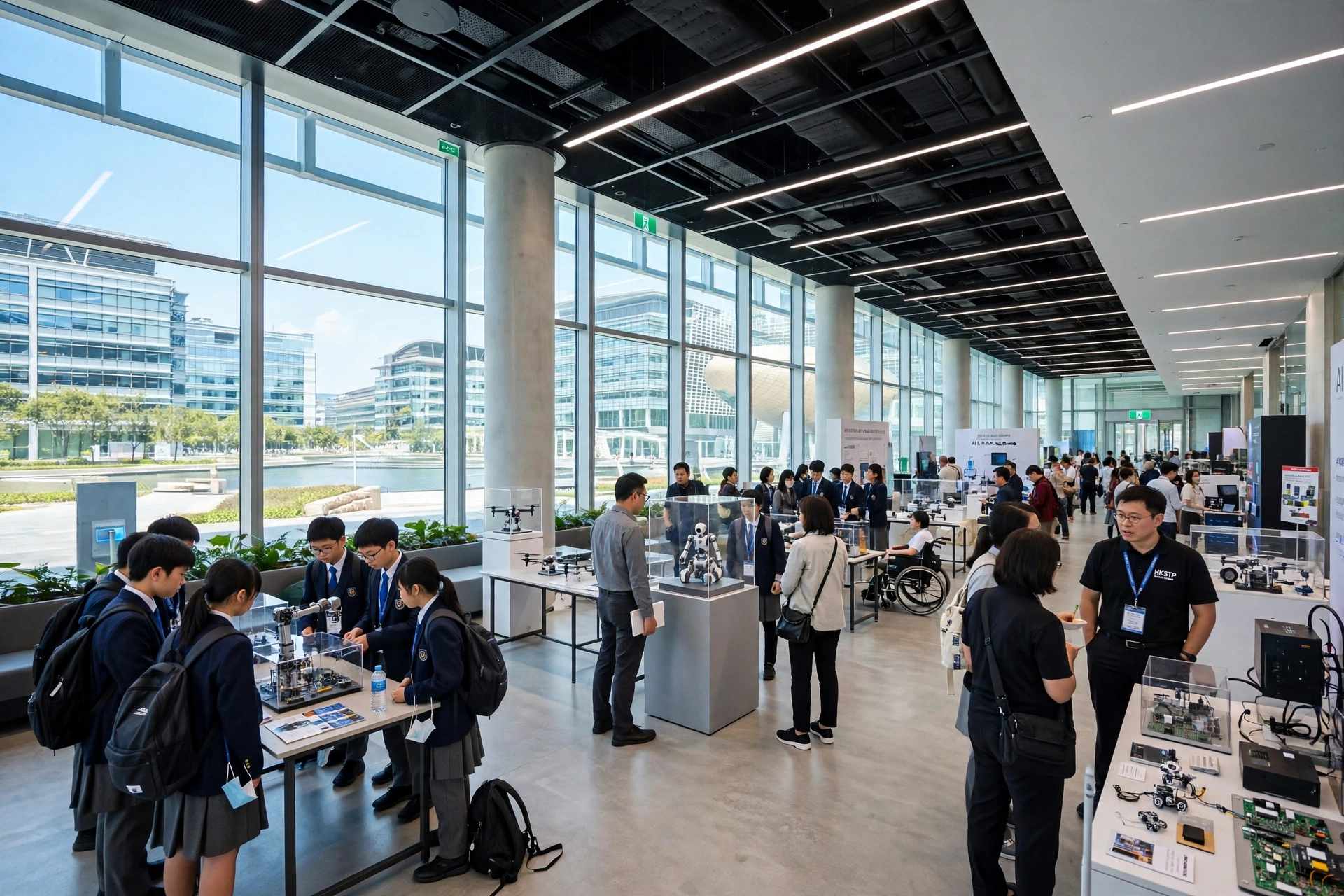
Hong Kong InnoCarnival 2026 opened on Saturday at Hong Kong Science Park in Sha Tin, starting nine days of hands-on science and technology for the public. The event runs until 1 November, and admission is free.
The carnival is organised by the Innovation and Technology Commission. It carries the theme “Lead with I&T Dream to Fly High”, and it brings together more than 40 programme partners, including local universities, research and development centres, government departments and other groups.
Visitors can try exhibits, join workshops, attend talks and take part in interactive experiences. The aim is simple. The public should be able to see, touch and test the inventions that Hong Kong researchers are working on, rather than only reading about them.
A flying start
Financial Secretary Paul Chan spoke at the opening ceremony on Saturday. He said Hong Kong’s strong frontier research, its financial services and its world-class talent together give the city a complete path from an idea to an industry.
He pointed to the First Five-Year Plan, announced last month, which positions the Northern Metropolis as a hub for innovation and technology industries. The plan links education, technology, talent and industry more closely, so that university research lines up with what industry needs.
Mr Chan said the government will also use Hong Kong’s financial strengths to channel more patient capital into research teams and start-ups. That support is meant to carry them from research and development through to real products people can use.
He stressed that innovation ultimately depends on people, and especially on young people. The carnival, he said, encourages public learning through exhibits, workshops, talks and interactive experiences.
He gave one example that caught the crowd’s attention. A mobile food-waste paper machine took the top prize in the junior secondary division of this year’s Hong Kong Student Science Project Competition.
“The idea is not complicated, but with dedication to putting it into practice, even a small invention can make a big difference. The next invention to reach the world may well come from one of the students here today,” he said.
Space takes centre stage
This year’s carnival has a new aerospace thematic zone, and it is one of the main draws. It shows research projects from local universities and their contributions to the country’s space exploration missions.
The zone fits the carnival’s theme. Hong Kong’s first payload specialist, Dr Lai Ka-ying, took part in the country’s space mission in May this year. Commissioner for Innovation and Technology Ivan Lee said at a media preview on 5 October that her flight proved the dream of space exploration is not out of reach.
One highlight is the Tianyun Camera, a greenhouse-gas detection instrument led by the Hong Kong University of Science and Technology. The device was operated by Dr Lai aboard the Tiangong space station.
Another exhibit is the Ground-Air Collaborative Automated Tunnel Inspection System, developed with the Hong Kong Productivity Council. It combines artificial intelligence, robotics and positioning technology for inspection and maintenance work on the T2 Trunk Road and Cha Kwo Ling Tunnel projects. It won a Gold award at the 2025 Edison Awards.
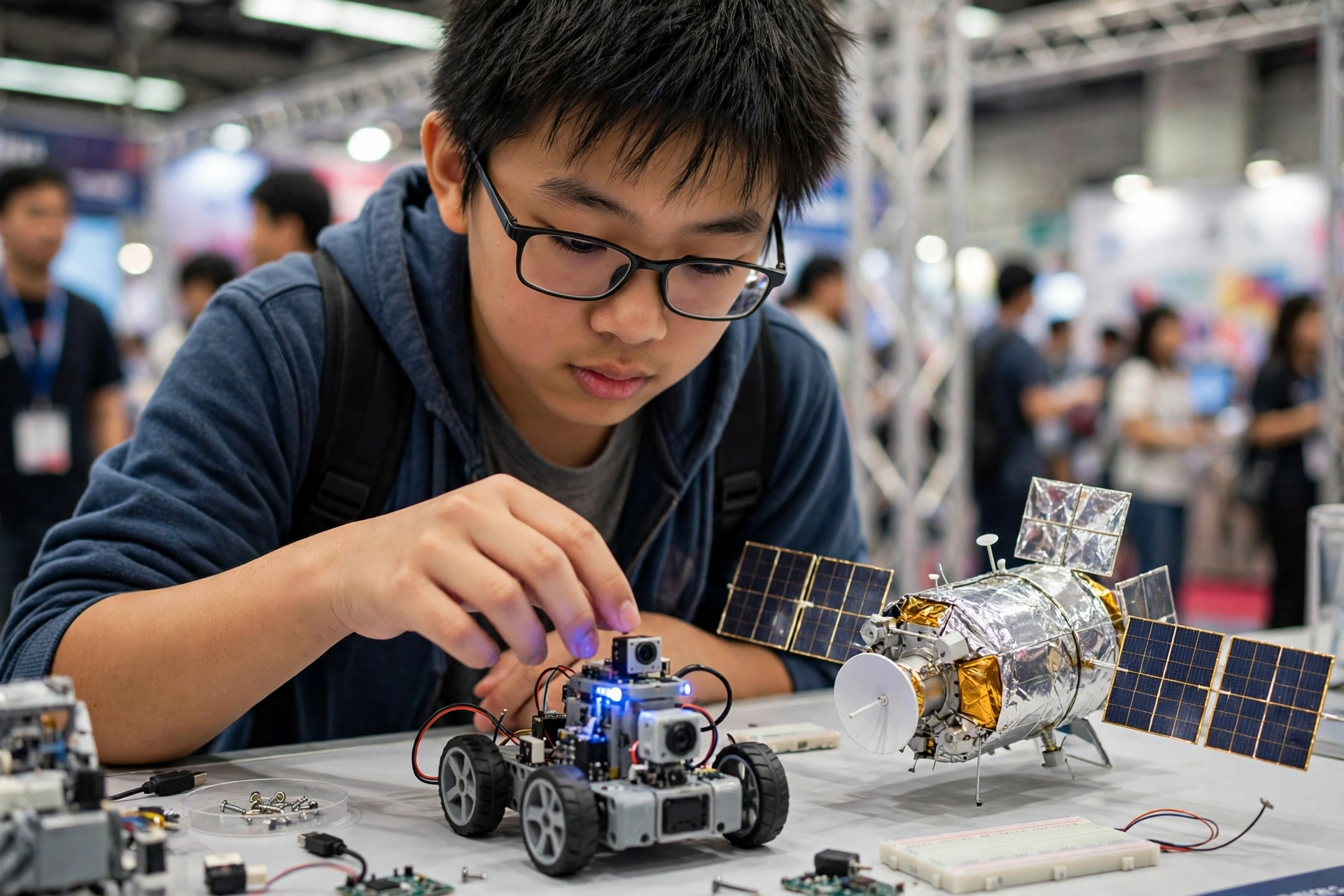
The aerospace zone is meant to inspire more young people to explore the unknown and pursue their dreams, according to the organisers. For many school visitors, it may be their first close look at how a satellite instrument or a tunnel robot actually works.
What visitors can do
The carnival is open on Saturdays and Sundays, 24, 25 and 31 October and 1 November, from 10 in the morning to 6 in the evening. On weekdays, from 26 to 30 October, it opens from 10 in the morning to 5 in the afternoon.
All activities are free of charge. Visitors can walk around the exhibition booths at Hong Kong Science Park and join interactive games. Some workshops and online seminars need advance registration, and places are given on a first-come, first-served basis, with some places kept for registration on the day.
People who attend physical workshops and physical parent-child workshops will receive an e-certificate of participation after the carnival ends. The certificates are sent to the email address given at registration.
The event is described by the organisers as the city’s largest public showcase of applied innovation and technology. With more than 40 partners taking part, the range runs from university research to government services and start-up products.
For families, the draw is the chance to try things rather than watch them. For students, it is a look at what a career in science and technology could mean in practice. For the government, it is a way to show that the First Five-Year Plan is not only a document, but a set of projects already under way.
The carnival closes on 1 November, after nine consecutive days. By then, the organisers hope that some of the young visitors will have found an idea of their own, and the confidence to follow it.