

British Prime Minister Andy Burnham has pressed President Donald Trump to guarantee Ukraine full access to the Starlink satellite network, in a phone call between the two leaders on Friday.
Downing Street said Burnham underlined the importance of Ukraine having full access, “so they can continue to defend themselves against Russia’s full-scale invasion”.
The call followed weeks of anger in Kyiv over limits placed on the service earlier this month. The restrictions hit Starlink and its military version, Starshield, which Ukrainian forces use for battlefield communications, drone flights and air defence.
Drones that lose signal
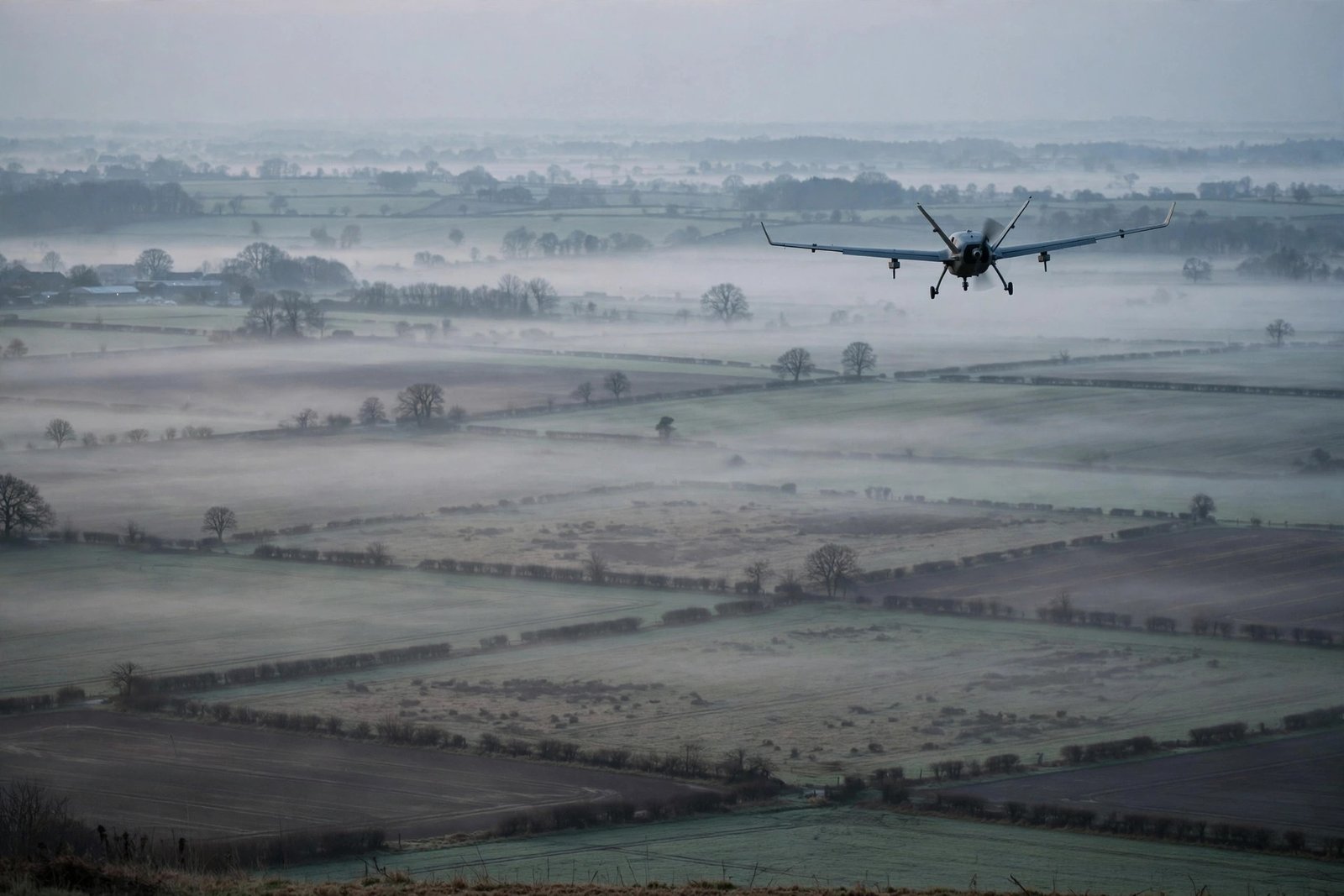
Under the limits, connections drop when a drone travels faster than about 160 kilometres per hour, roughly 100 miles per hour. That has undermined the strike drones and interceptor drones Ukraine uses to fight off Russian attacks.
President Volodymyr Zelenskyy said on Friday that speeds had still not been fully restored. Trump had said a day earlier that Elon Musk, whose company SpaceX runs Starlink, had “put it back”.
Zelenskyy said Ukraine had tested the system itself. Terminals worked at speeds of up to 180 kilometres per hour inside the European Union, he said, but cut out above 160 inside Ukraine. He called the pattern a “planned operation” designed to weaken Ukraine’s defences.
His military technology adviser, Serhii Beskrestnov, gave a blunter verdict to the Telegraph. “At present, we have not observed any lifting of the restrictions on Starlink,” he said.
Zelenskyy said he is waiting for an update from US Secretary of State Marco Rubio, who promised to give him information within about 48 hours.
Who ordered the slowdown?
That question is still unanswered. The Wall Street Journal has reported that Musk ordered the slowdown, and that Trump telephoned him on Wednesday to ask for the limits to be lifted.
Reuters has reported that the order to throttle Starshield came from inside the White House. The Trump administration accepts that a slowdown happened but has not said whether it gave the order.
The White House pointed reporters to Trump’s remarks on Friday. He said he had not spoken with Musk about Ukraine’s Starlink access, adding: “If there is a problem, I’ll get it straightened out.”
Musk, for his part, says the decision is not his to make. “Starshield systems are owned and controlled by the US government,” he wrote on social media this week. “Any limits on speed or usage are decided by the US military and ultimately (by the president of the United States).”
Democrats in Congress say they will investigate why Starshield was slowed. Representative Jason Crow called for clarity on Friday, warning about the risks of the US depending so heavily on one private company. “Unelected billionaires and private corporations should not decide what is in the best interest of America’s national security,” he said.
Why it matters
For Ukraine, Starlink is not a convenience. Commanders describe it as the lifeblood of frontline communication between units, and there is no rival system that can replace it at short notice.
The row has also rattled governments in Europe. Some officials there now argue that Europe must build its own military satellite communications network, because a service its security depends on can be slowed by decisions taken far away.
The pattern is not new either. Reuters reports that US officials have for years asked Musk to adjust Starlink services in Ukraine and in the Middle East, according to people familiar with the matter. What changed this month is that the decision, whoever made it, showed up directly on the battlefield.