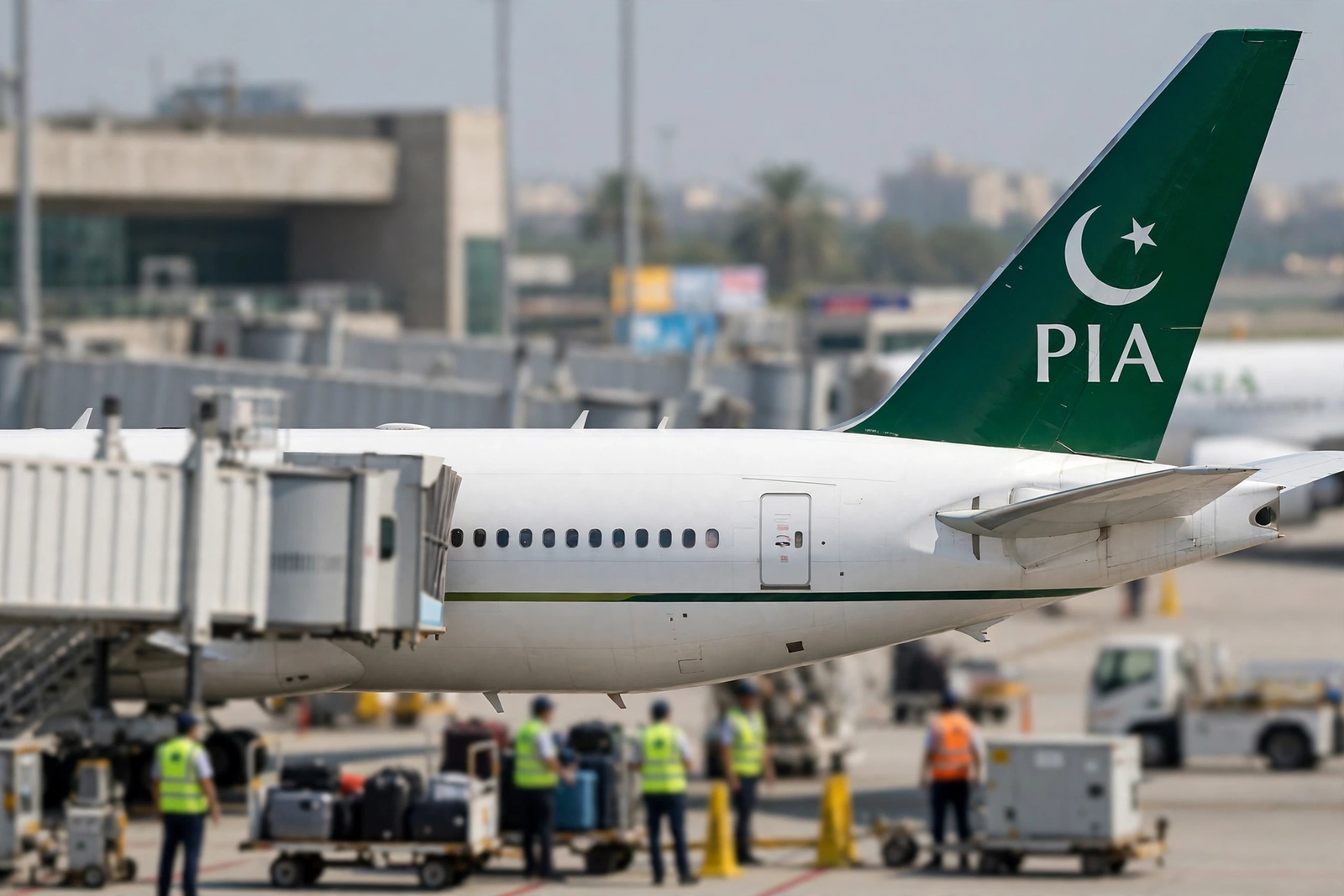
Pakistan International Airlines has a new chief executive. Adrian Hamilton-Manns formally took charge on Monday, 2 November, after his appointment was announced by the airline’s board. The move places an aviation executive with more than 30 years of experience at the head of the national carrier at a key moment in its history, as it works under private sector management following privatisation.
PIA described the appointment as a pivotal chapter in its ongoing transformation. In its statement, the board said Hamilton-Manns brings a wealth of leadership and strategic experience in the global aviation sector. It also described him as a world expert in transforming and reviving airlines, a phrase that sets high expectations for what comes next. Passengers, staff and investors will now watch closely to see how that experience translates into better flights, better service and a stronger balance sheet.
Hamilton-Manns is a New Zealand born executive whose career has been built largely around low cost airlines. He has served as chief executive of three airlines, and he has held senior roles at several others. His most recent job was at SalamAir, the low cost carrier based in Oman, where he served as chief executive from 2024 until this year. Before that, he led FlyArystan in Kazakhstan, and his career also includes roles at South African Airways and Virgin Australia. That mix of markets gives him first hand knowledge of how budget airlines keep costs low while trying to keep passengers happy.
He takes over from Air Vice Marshal Amir Hayat, who led PIA for about four and a half years. The board thanked Hayat for his service and credited him with introducing structural reforms, improving operational efficiency and preparing the airline for privatisation. Hayat’s tenure ended on a symbolic note. Just a day before the change, he welcomed PIA’s first Boeing 787-9 Dreamliner at Islamabad airport, a moment that marked a new fleet chapter for the airline.
The timing of the change is important. PIA was privatised in December 2025, when a consortium led by Arif Habib Corporation won a competitive auction for a 75 percent stake in the airline with a bid of Rs135 billion. Management control passed to the new owners on 29 June 2026. Since then, the airline has been run as a privatised business, not as a state run department. That shift changes how decisions are made, how money is spent and how performance is judged. A chief executive in this setting is expected to think like a commercial leader first, and to answer to a board and to shareholders.
For passengers, the questions are practical. Will flights run on time more often? Will booking, check in and baggage handling get smoother? Will the airline add routes that people actually want, and will fares stay fair? A new chief executive cannot fix everything at once, but early choices matter. Fleet use, route planning, staff morale and customer service are all areas where a fresh leader can set a tone in the first weeks. Travellers who fly PIA to the Gulf, the United Kingdom and within Pakistan will be the first to judge whether the change feels real.
For staff, a leadership change can bring both hope and worry. Some employees will welcome a leader with airline turnaround experience, hoping for clearer plans and better tools to do their jobs. Others may worry about restructuring, cost cutting or changes to working patterns. Good leadership in such a moment means clear communication, respect for front line staff, and a plan that people can understand. Cabin crew, engineers, ground staff and call centre teams are the face of the airline for most passengers, and their morale shows up in service quality.
The wider aviation market in Pakistan is also changing. Private airlines, foreign carriers and new aircraft types are raising competition. Passengers now compare prices, timings and comfort more easily through apps and travel sites. PIA’s history and network still give it strengths, including its brand recognition and its links to Pakistani communities abroad. But history alone does not fill seats. The airline needs reliable schedules, competitive fares and a reputation for looking after its customers when things go wrong.
Hamilton-Manns will also need to handle the business side with care. Fuel prices, currency movements, maintenance costs and airport charges all affect an airline’s bottom line. A low cost background may help him find savings, but PIA is a full service carrier with long haul routes, and its cost structure is different from a small budget airline. Balancing those realities, while keeping safety and service standards high, will be his central test.
For now, the facts are straightforward. Adrian Hamilton-Manns took charge as PIA chief executive on 2 November 2026, succeeding Amir Hayat, after a career spanning more than three decades and three airlines as chief executive. The board has called his arrival a pivotal chapter. Whether that chapter becomes a success story will depend on the decisions he makes in the months ahead, and on how passengers and staff experience those decisions day by day.
Also Read: PSX KSE-100 Crosses 168,000 After Strong Rally On Nov 3
Also Read: PIA Dreamliner Arrives In Islamabad On First UK Flight