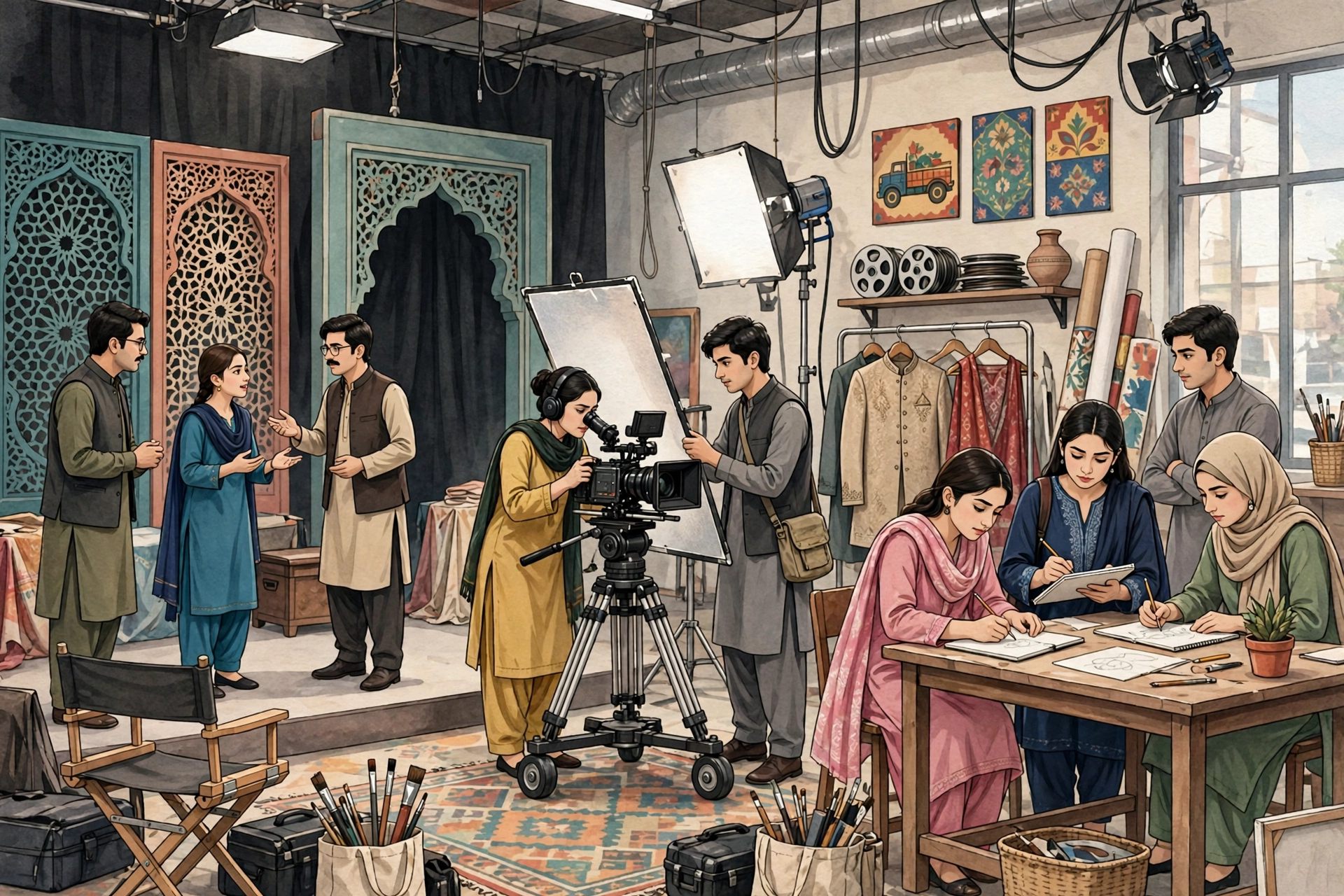
PTV Film and Drama Academy is set for revival under a strategy directed by Information Minister Attaullah Tarar, with the aim of turning the academy into a modern training institution for filmmaking, drama production and digital content. The plan reflects a recognition that Pakistan’s screen industries need structured training if they are to grow, and that a public broadcaster with a long history in television drama and film is well placed to help provide that training. For young people who dream of working behind or in front of the camera, a revived academy could offer a clearer path into the industry.
The academy will focus on three linked areas: filmmaking, drama production and digital content. Filmmaking covers the full process of making a film, from story and script to shooting, editing and final presentation. Drama production covers the particular skills needed for television drama, which has been a central part of Pakistani popular culture for decades. Digital content covers the newer world of online video, short form content and programmes made for phones and social platforms. Together, those three areas reflect how audiences watch content today, across television screens, cinema screens and mobile devices.
Upgraded facilities are a key part of the strategy. Training in film and drama cannot be done from textbooks alone. Students need cameras, lighting, sound equipment, editing suites and studio space where they can practise and make mistakes in a learning environment. Upgraded facilities would allow students to work with tools that are closer to those used in professional productions, so that the step from classroom to workplace is less abrupt. Facilities also matter for teachers, who need proper spaces to demonstrate techniques and to review student work in detail.
Collaboration with the private sector and with universities is also part of the plan. Private sector collaboration can bring in working professionals, current industry practice and opportunities for internships or placements. University collaboration can bring in academic strengths in media studies, research and teaching methods. When a training institution works with both sides, students can benefit from practical experience as well as from structured learning. That combination is often more useful than either approach on its own, because the screen industries require both creativity and technical discipline.
One of the most notable elements of the plan is Pakistan’s first local colour grading training programme. Colour grading is the process of adjusting the colours, brightness and overall look of filmed material in post production. It is a skilled job that shapes the mood of a scene, whether warm and bright for a cheerful moment or cool and muted for a tense one. Until now, local training in this specialised area has been limited, and professionals often had to learn on the job or seek training abroad. A local programme in colour grading would fill a clear gap and could create new career opportunities for young technicians.
Young people’s projects are to be encouraged for PTV platforms under the revival plan. That encouragement matters because new talent often struggles to find a first outlet for its work. A student film, a short drama or a digital series needs an audience if its maker is to learn from feedback and to build a portfolio. By offering PTV platforms as a potential home for young people’s projects, the plan gives emerging creators a chance to be seen by a wider audience. It also gives PTV fresh voices and new ideas, which can help a long established broadcaster to stay relevant to younger viewers.
The history of PTV drama gives this revival a strong foundation to build on. For many viewers in Pakistan, PTV dramas from earlier decades remain fondly remembered for their writing, acting and production values. That heritage is an asset, but it cannot by itself guarantee success today. Audiences, technology and viewing habits have all changed, and a modern academy must teach both the timeless skills of storytelling and the new skills needed for digital production. Balancing respect for that heritage with openness to new forms will be one of the challenges for the revived institution.
Training in drama production also raises wider questions about writing, direction and performance. A good drama depends first on a good script, and scriptwriting is a skill that takes practice, feedback and patience. Direction requires an understanding of camera, performance and pacing, while acting requires training in voice, movement and character. A modern academy that covers all of those areas can help to raise standards across the industry, not just in one specialism. That broad approach is important, because a production succeeds only when all of its parts work together.
It is important to note, clearly and honestly, that no start date, fees or budget were given for the revival plan in the information available. That means readers should not assume a date when admissions will open, a fee structure, or a total spending figure. Those details will need to be announced separately, and until they are, the plan should be understood as a strategy and direction, rather than as a fully costed programme with a launch date. This note is included so that interested students do not make plans based on details that have not yet been published.
For students, parents and teachers, the next updates to watch for will be announcements on admissions, courses, facilities and partnerships. A clear announcement on those points will help young people to decide whether the academy is right for them and how to prepare. In the meantime, the direction set by the minister gives a sense of purpose: a modern training institution, upgraded facilities, collaboration with the private sector and universities, a first local programme in colour grading, and encouragement for young people’s projects on PTV platforms.
If that direction is followed through, the PTV Film and Drama Academy could play a useful role in Pakistan’s creative future. It could help to train the next generation of filmmakers, drama makers and digital creators, and it could connect that training to real platforms where their work can be seen. For an industry that depends on new talent, that kind of institution, rooted in a broadcaster with a long history and open to new forms of content, is a welcome development, and its progress will be worth following as details are announced.
Also Read: World Culture Festival Karachi Day 7 Brings Global Artists